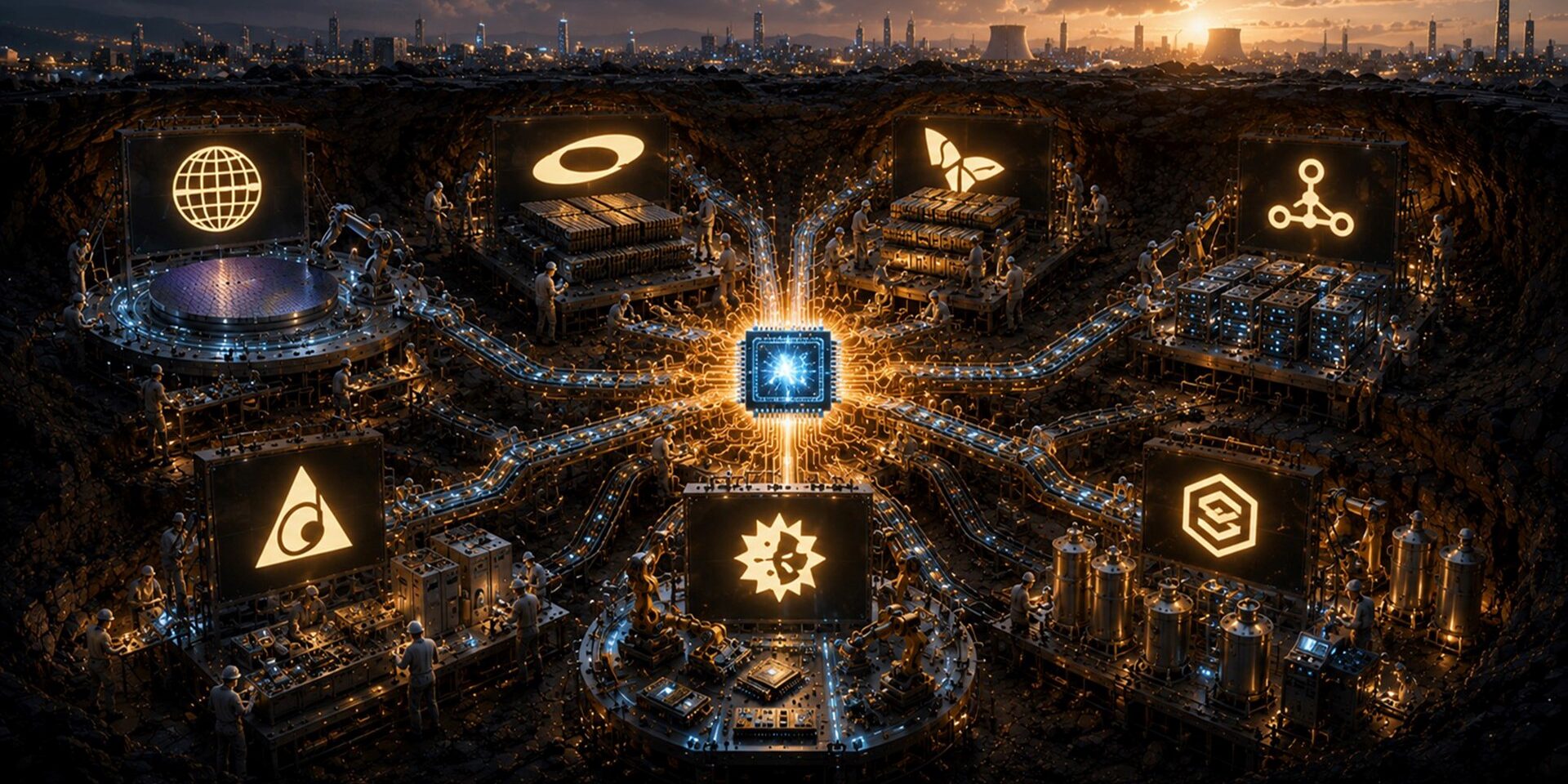
The phrase “The Secret Seven” was coined by global investment manager Ninety One to describe seven crucial Asian technology companies that power global AI infrastructure. The term was designed to highlight hardware champions in Asia that are as foundational to AI as the US “Magnificent Seven” but have been historically undervalued by the market.
Although Nvidia reported another record quarter this week with sales and profits beating expectations, a dividend hike and a share buyback programme, together with a bullish outlook for the next quarter, it was trading down 2.58% for the week at the time of writing. The lukewarm reception of Nvidia’s results highlights just how lofty investors’ expectations have become for the “Magnificent Seven” stocks – Alphabet, Amazon, Apple, Meta, Microsoft, Nvidia and Tesla.
Instead, it appears that some investors are turning elsewhere for more attractive entry prices into the AI boom. A Bloomberg gauge of Asian chipmakers surged around 5.5% on the day that Nvidia announced its results. Like Nvidia, these companies stand to gain handsomely from accelerated investment in data centre infrastructure by AI companies such as OpenAI and Anthropic, and cloud providers such as Amazon, Alphabet and Microsoft.
Ninety One highlighted this theme several months ago in a piece where it discussed the rise of the “Secret Seven”. These emerging-market infrastructure companies, most based in Taiwan, South Korea and parts of Southeast Asia, play an outsized role in the AI supply chain. However, their valuations have lagged their strategic importance.
The Secret Seven companies are:
- TSMC, the world’s largest independent contract manufacturer of semiconductors;
- SK Hynix, a key supplier of Nvidia-qualified high-bandwidth memory;
- Samsung Electronics, the world’s largest producer of memory;
- Accton, a specialist in highspeed network switches for hyperscale data centres;
- Delta Electronics, which provides the power and cooling systems for data centres;
- ASE Tech, a leader in advanced semiconductor packaging, and
- Anji Microelectronics a high-end semiconductor materials company.
The “Secret Seven” are the companies that make the AI revolution possible. Yet they are not household names like the “Magnificent Seven,” and many of them trade on earnings multiples that reflect their emerging-market classification. Some investors are starting to see this dislocation between the “Secret Seven’s” valuation and their role in the AI supply chain as a significant opportunity.
According to Bloomberg, Asian suppliers now account for about 90% of Nvidia’s production costs, up from roughly 65% last year. Not only are these suppliers reaping rewards from the AI data centre boom, they are also positioned for the emerging physical AI and robotics segments. Nvidia CEO Jensen Huang pinpoints this as the big opportunity for the next five years.
We are seeing a capital investment story that recalls the build-out of the railways in the 19th century and the telecommunications networks of the late 20th century. Vast sums are flowing first into data centre infrastructure before it becomes clear which applications and business models will ultimately capture the most value. Nvidia forecasts data centre spending to reach between $3 trillion and $4 trillion a year by the end of this decade.
Hyperscale cloud companies, social media platforms and software companies, once celebrated for their capital-light models, are now pouring hundreds of billions into data centre infrastructure. Prices for computer components have spiked dramatically as a result, and the companies providing RAM, SSDs, processors and GPUs are benefitting from fat order books and higher profit margins.
For the cloud and AI platform providers, the road from infrastructure investment to broad profitability is long and not without risk. While the benefits of the technology are real and transformative, the economics are being stress tested. It is not yet clear who the winners and losers will be, nor when they will be able to unlock profits from the big bets they are currently making.
How the Asian companies we mentioned fare will be determined in part by factors outside their direct control. A weaker US dollar would provide a material tailwind for these companies. Ninety One’s own research suggests a decade-long dollar strength cycle may be turning, with capital beginning to rebalance away from US assets.
It will be equally important for the hyperscalers and AI players in the US to sustain their current capital expenditure commitments. Any signs of hesitation in data centre spending would ripple quickly through the supply chain. If AI investment slows down due to shareholder pressure, power constraints, regulatory scrutiny or overcapacity concerns, the effects would reverberate through Asia’s tech industry.
All of that said, the “Secret Seven” (and Nvidia) have a position in AI that is analogous to the suppliers of picks and shovels in a gold rush. Regardless of which AI applications or platforms dominate, demand for the underlying infrastructure is likely to remain strong. Dynasty clients with direct or indirect exposure to the Ninety One Emerging Markets strategy are participating in this story through holdings linked to the broader AI supply chain.
“During the Gold Rush, most would-be miners lost money, but people who sold them picks, shovels, tents and blue jeans (Levi Strauss) made a nice profit.”
– Peter Lynch, American investor, mutual fund manager, author and philanthropist
“The buildout of AI factories – the largest infrastructure expansion in human history – is accelerating at extraordinary speed. Agentic AI has arrived, doing productive work, generating real value, and scaling rapidly across companies and industries.”
– Jensen Huang, Nvidia’s CEO
Global News
- Asian technology shares rallied on Thursday as continued optimism around AI and robotics boosted semiconductor and hardware companies across the region. Investors increased exposure to chipmakers and AI-linked manufacturers amid expectations that growing demand for automated vehicles, humanoid robots and advanced computing systems will drive another wave of investment in AI infrastructure. The gains extended the broader technology-led market rally that has supported Asian equities in recent months.
- Iran responded on Thursday to a US proposal that reportedly narrowed some differences over sanctions relief and guarantees against further attacks, raising tentative hopes for a diplomatic breakthrough. The developments followed Iran’s warning that it could retaliate beyond the Middle East if the US or Israel launches additional strikes after Trump said on Tuesday that attacks on Tehran could come “maybe Friday, Saturday, Sunday”. The tensions continued to fuel concerns over global energy markets and shipping routes, while opposition within the Republican-led US Senate grew ahead of next year’s midterm elections.
- The US dollar hovered near a six-week high on Friday, while Treasury yields remained volatile after surging earlier in the week amid concerns over US-Iran talks, rising oil prices, and inflation. The 30-year Treasury yield rose above 5.2% on Tuesday, its highest level since 2007, before partially retreating on Wednesday after Trump said the US was in the “final stages” of negotiations with Iran, raising hopes of a diplomatic breakthrough that could ease pressure on energy prices and inflation. However, divisions over uranium enrichment and control of the Strait of Hormuz continued to drive volatility across oil, currency, bond and equity markets.
- A New York Times/Siena College poll released on Monday showed Trump’s approval rating at 37%, with 59% of respondents disapproving of his performance. Trump lost ground on inflation and cost-of-living issues even as Republicans remained broadly supportive of his agenda. Republicans are increasingly concerned that the Iran conflict and rising fuel prices could hurt the party in this year’s midterm elections as voter dissatisfaction with the economy grows.
- China’s economy lost momentum in April as retail sales, industrial output and investment growth all missed expectations, highlighting continued weakness in domestic demand and the property sector. Retail sales and industrial production both slowed from March levels, while urban fixed-asset investment contracted in the first four months of the year as the real-estate downturn deepened. Analysts said persistent property weakness and rising geopolitical and energy-market uncertainty are continuing to pressure confidence and economic activity.
- Russian President Vladimir Putin left Beijing on Tuesday after a two-day visit focused on strengthening energy and strategic ties with Chinese President Xi Jinping amid rising geopolitical tensions and disruption to global energy markets. China and Russia criticised Trump’s proposed Golden Dome missile shield and US nuclear policy during the talks. However, Putin failed to secure a breakthrough on the proposed Power of Siberia 2 gas pipeline to China, with key commercial terms still unresolved despite concerns over the reliability of seaborne energy supplies following disruption around the Strait of Hormuz.
- Nvidia reported another quarter of exceptional growth on Wednesday, with sales rising 85% to $81.6 billion as demand for artificial intelligence chips and data-centre infrastructure remained strong. Huang also highlighted efforts to diversify beyond hyperscalers and pointed to new demand from robotics, automated vehicles and so-called “physical AI”.
- Samsung Electronics reached a tentative agreement with labour unions on Wednesday to avert a strike by semiconductor workers, underscoring the growing strategic importance of chip manufacturing during the AI boom. Under the deal, Samsung could distribute as much as 40 trillion won ($26.6 billion) to its 78,000 semiconductor employees over the next decade, depending on profit targets, with average payouts potentially reaching about $340,000 per worker. The agreement follows a similar bonus arrangement reached by rival SK Hynix last year.
- Meta began notifying employees of job cuts on Wednesday as part of a broader restructuring aimed at improving efficiency while sharply increasing investment in artificial intelligence infrastructure. The layoffs are expected to affect thousands of employees globally, particularly in engineering and product teams, as Meta redirects spending toward AI development. At the same time, the company is developing one of the world’s largest AI data centres in rural Louisiana, with the Hyperion project expected to consume as much electricity as New York City on a winter day. Meta plans to spend more than $200 billion on the development and has pledged to create 500 jobs by 2035.
- Google unveiled a series of AI-powered upgrades to Search, Gemini, and other services on Tuesday as it accelerates its efforts to adapt its core business to the AI era. The updates include a new AI search mode designed to handle more complex queries and more autonomous Gemini features that allow users to create AI “agents” to research and track topics independently. The changes move Google’s search products closer to rivals such as OpenAI and Anthropic as competition intensifies around AI-powered search and digital assistants.
- JPMorgan Chase & Co will likely hire more AI specialists and fewer traditional finance employees as adoption of the technology accelerates, CEO Jamie Dimon said on Thursday. Dimon said the shift could reduce banking jobs over time, although the bank would likely manage the transition through natural staff turnover rather than large-scale layoffs, noting that about 10% of employees leave each year. He also warned that moving too quickly on automation could create broader social and political challenges despite the productivity benefits of AI.
- Bristol Myers Squibb said on Wednesday it is partnering with Anthropic to deploy the Claude AI model across more than 30,000 employees as the drugmaker seeks to accelerate medicine discovery and development. Bristol will also evaluate the use of Claude Code across research, manufacturing and commercial operations. The partnership follows similar AI initiatives across the pharmaceutical industry, including Eli Lilly and Company’s collaboration with Nvidia, as companies increasingly use AI to improve productivity and shorten drug-development timelines.
- SpaceX filed publicly for a Nasdaq listing on Wednesday, revealing a super-voting share structure designed to allow Elon Musk to retain control if the company meets long-term operational targets, including plans linked to establishing a large-scale human settlement on Mars. The filing showed SpaceX generated $4.69 billion in quarterly revenue but reported a net loss of $4.28 billion, as the company continues to invest heavily in rockets, satellites and space infrastructure. The IPO is expected to value SpaceX at about $2 trillion, potentially making it one of the largest public listings in history.
- As at Thursday’s close the S&P 500 was 0.5% up for the week.
Local News
- The latest trade conditions survey by the South African Chamber of Commerce and Industry (SACCI) showed all industries are vulnerable to job losses and company closures should the war between the US and Iran be prolonged. 75% of respondents in the April survey reported rising production costs, while 95% expect costs to increase further over the next six months. The trade conditions index fell seven points month-on-month into negative territory, with all activity components worsening apart from order backlogs. SACCI warned that trade conditions are expected to deteriorate further as previous optimism around economic growth fades.
- Mineral and Petroleum Resources Minister Gwede Mantashe said on Tuesday that South Africa may send a delegation to the Strait of Hormuz to assess the impact of the ongoing disruption on global oil supplies and shipping routes. Speaking during his budget vote in Parliament, Mantashe said it was unsustainable for South Africa to remain heavily exposed to external energy shocks despite the country’s own petroleum resources. He also said South Africa has sufficient fuel supplies, although prices are expected to rise further when temporary fuel-levy relief measures expire next month.
- The rate of inflation accelerated from 3.1% to 4% in April, the highest level in 20 months, as sharply higher fuel prices linked to the conflict in Iran pushed up transport costs. Statistics South Africa data released on Wednesday showed the fuel index recorded its largest monthly increase since the current inflation measure began in 2008, while airfares jumped 24.5%. The inflation print matched economists’ expectations but reinforced concerns that the South African Reserve Bank may need to keep interest rates higher for longer as policymakers monitor the broader impact of rising fuel costs on inflation.
- South Africa has imposed the steepest and broadest steel tariffs in two decades to protect local producers from a surge in low-cost imports, particularly from China. The measures, described as the country’s biggest protectionist shift in 20 years, include duties of up to 30% on a wide range of steel and metal products and are expected to reshape trade relations with China, South Africa’s largest trading partner. The International Trade Administration Commission’s review covered about R67 billion in imports, while manufacturers warned the tariffs could raise costs for locally produced vehicles and other goods.
- Electricity Minister Kgosientsho Ramokgopa has called for Eskom to take over Johannesburg’s failing electricity revenue collection system as the city faces possible power disruptions this winter. Eskom said Johannesburg owes R5.3 billion in unpaid electricity debt, with another R1.6 billion still due for the current billing period and warned the city has repeatedly failed to meet payment commitments. Finance Minister Enoch Godongwana has also threatened to withhold R8 billion in national funding due in July if Johannesburg does not reverse a controversial R10.3 billion wage agreement that Treasury believes the city cannot afford.
- Balwin Properties received a R2.26 billion buyout offer from a consortium led by the Public Investment Corporation and founder-linked investors in a deal that would result in the residential developer being delisted from the JSE and A2X after nearly 11 years as a listed company. The consortium offered shareholders R4.35 a share, a 35% premium to Balwin’s 90-day average share price, as weak trading liquidity and a persistent discount to underlying asset value reduced the benefits of remaining listed. Balwin said on Wednesday that independent board members would review the proposal and appoint advisers before shareholders consider the offer.
- Takealot, which celebrated its 15th anniversary in South Africa this week, revealed new insights on Thursday into changing local online shopping trends as e-commerce becomes more embedded in everyday consumer spending. The data highlighted growing demand from smaller towns and regional areas outside major metros, rising interest in subscription services and faster delivery expectations, as well as seasonal shopping spikes linked to Black Friday and payday purchasing behaviour. Among more than a billion product searches, the iPhone was the most searched item with over 15 million clicks, followed by baby products, laptops, smart TVs, Samsung phones, air fryers and Lego.
- As at the time of writing, the rand was 1.2% stronger against the dollar, and the ALSI was 0.4% down for the week.
Sources: Dynasty, Business Day, BusinessTech, Reuters, Bloomberg, Daily Investor, CNBC, Business Report, NY Times, CNN, Daily Maverick, WSJ, etc.