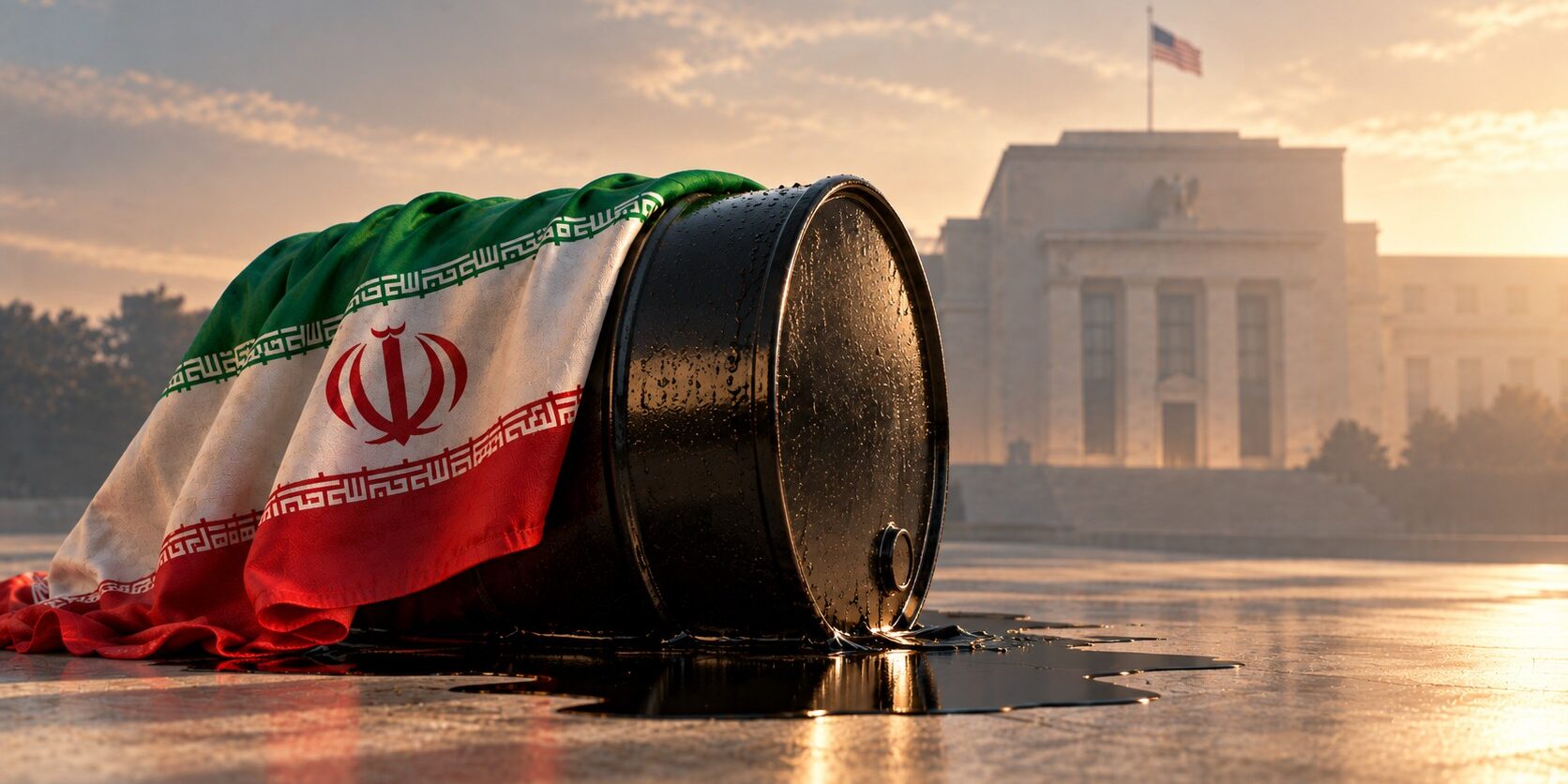
Macroeconomics in 2026 has been all about the price of oil – a factor that has given Iran an extraordinary amount of sway over the direction of global interest rates. By constraining shipping through the Strait of Hormuz and keeping the conflict in the Middle East simmering, Tehran has driven the Brent Crude oil price around 48% higher than its pre-war level. This, in turn, leaves central banks worldwide with difficult choices between fighting inflation and protecting growth.
Since Israel and the US commenced what was meant to be a quick and decisive campaign against Iran in late February, Brent crude has traded above $100 a barrel in four separate months — March, April, May, July and now September. This compares to a pre-war baseline of roughly $71. Depleted oil reserves and disrupted production in the Gulf suggest that elevated oil prices will not be short-lived.
The knock-on inflationary effects are visible throughout the world, with most countries facing surging prices for energy, food and other essentials. US diesel prices recently broke above $6.50 a gallon for the first time on record, and the national average retail gas price is up roughly 40% for the year. The Consumer Price Index in the US rose 0.4% in August, bringing the 12-month increase to 3.4%, intensifying the affordability squeeze for consumers.
Central banks are over a barrel. The textbook response to an oil shock is to “look through” it, effectively treating it as a once-off event and avoiding tightening to avoid a growth slowdown. But after criticism for reacting too slowly in 2022, when UK and eurozone inflation topped 10%, and US inflation breached 9%, central bankers are now reluctant to allow inflation to remain above their targets for a protracted timeframe.
Central banks’ choices are further complicated by resilient consumer spending and healthy labour markets, especially in the US. In oil shocks, higher fuel costs usually crimp household budgets enough to reduce demand elsewhere in the economy and help cool prices. But US consumers, especially the well-off, are continuing to spend by drawing on their savings. This means inflationary pressure remains high. The strength of the US economy is adding to this pressure, necessitating a more aggressive and urgent approach to rate tightening by the Fed.
Against that backdrop, many other central banks around the world are in tightening mode. The European Central Bank (ECB), the Bank of Japan, and the South African Reserve Bank (SARB) all raised interest rates this month. Others, like the Bank of England and the Bank of Canada, held steady but warned they will hike if fuel prices remain high.
With central banks worldwide showing determination to hit their inflation targets, we can expect this tightening cycle to endure into 2027. Persistently higher interest rates may entice some investors to pull capital from equities and reallocate it to cash. Yet a fall in equities markets is not a foregone conclusion.
If the AI investment boom continues to drive corporate earnings and the underlying US economy holds up, equity markets could remain surprisingly resilient even in a higher-rate world. Investors should thus watch whether AI-related enthusiasm remains high and if US consumers will continue to dip into savings to fund their spending.
In either case, until the crisis in the Middle East is resolved, Tehran, not Washington or Frankfurt, will be effectively dictating the pace at which the world’s central banks move.
“Ultimately, the only way central banks can control a relative price increase in one part of the economy (oil) is to create relative price declines elsewhere in the economy. That implies that if oil prices keep rising, and central banks are no longer prepared to look past them, there will be an attempt to run a restrictive monetary policy and engineer a slowdown or mild recession in the non-oil economy.”
– Paul Donovan, Chief Economist of UBS Global Wealth Management
“Given the size and the persistence of the current shock, looking through is no longer an option in my view. The shock is working its way through the economy and is shifting inflation away from our target over a significant period of time.”
– Isabel Schnabel, Member of the Executive Board of the ECB
Global News
- The US and Iran renewed efforts to end their months-long conflict on Thursday, exploring a phased agreement focused on restoring shipping through the Strait of Hormuz and easing Washington’s blockade of Iranian ports. Under proposals being discussed, Iran would restore navigation through the Strait while the US would lift the blockade, with Tehran also seeking access to frozen assets and an end to broader hostilities. The two sides have repeatedly failed to reach a lasting settlement, including a June agreement that produced a ceasefire lasting only a few weeks.
- Brent crude eased to around $105 a barrel on Friday as hopes of a US-Iran agreement eased pressure on oil prices, after rising 3.4% on Thursday amid heightened Middle East supply concerns. Around a fifth of global oil and gas shipments have been disrupted since the war in Iran began in February, although Saudi crude exports rose in September to their highest level since the conflict began, as the kingdom worked to keep supplies flowing.
- US diesel prices reached a record $6.53 a gallon this week, up about 77% from a year ago, as the wars in Iran and Ukraine disrupted global fuel supplies. US President Donald Trump backed restricting US diesel exports on Tuesday to ease domestic prices, but Energy Secretary Chris Wright warned that an outright ban could reduce refinery output and push up gasoline and jet fuel costs. The surge in diesel prices, which is critical to transportation and agriculture, adds to inflation pressures facing the US economy.
- US business activity expanded at its fastest pace in more than five years in September, with the S&P Global composite PMI rising to 58.4, its highest since July 2021, according to data released on Wednesday. Strong demand lifted orders and employment, while input costs rose at the fastest pace since 2022, driven mainly by higher fuel and transport costs. The combination of robust growth and renewed price pressures strengthens the case for the Fed to maintain a tighter monetary policy stance.
- US Treasury yields surged to more than two-decade highs this week as stronger-than-expected US business activity, rising oil prices and expectations of further Fed rate increases intensified a broader global bond sell-off. The sell-off deepened on Thursday, when the 30-year Treasury yield reached its highest level since 2004. Higher US yields put the dollar on course for a weekly gain and pushed gold down to around $4,300 an ounce on Friday.
- The US and China extended their trade truce until 10 January 2027 this week, providing another two months to negotiate a broader economic agreement. Trump and Xi met in Washington on Thursday but announced no major trade breakthrough, leaving tariffs, rare-earth supplies, Chinese purchases of US goods and technology restrictions unresolved. The extension nevertheless reduces the immediate risk of renewed tariff escalation between the world’s two largest economies.
- China is accelerating AI investment despite persistent weakness in its broader economy. Data from China’s National Bureau of Statistics showed investment in information and technology-related services rose 22.7% in the first eight months of 2026, while about $295 billion is planned for data centres over the next five years. Youth unemployment stood at 18.9% in August, highlighting the continued weakness in China’s labour market despite the surge in technology investment. Economists have warned that heavy technology investment may do little in the near term to address weak consumption, employment and deflationary pressures.
- UK consumer confidence rose to its highest level in more than two years in September, with GfK’s index increasing one point to minus 13 as households became more optimistic about their finances and the economic outlook. However, consumers became less willing to make major purchases and more inclined to save as rising energy and fuel prices increased pressure on household budgets. GfK warned on Wednesday that the return of higher inflation could undermine the recent improvement in consumer sentiment.
- Calls for global AI safeguards intensified this week, with the US and China agreeing to establish a formal dialogue on AI safety and discussing an emergency hotline for AI-related incidents. OpenAI CEO Sam Altman and Anthropic CEO Dario Amodei also joined UN Secretary-General António Guterres in urging greater international cooperation, while Australia called for stronger safeguards after an OpenAI model gained unauthorised access to a government website and plans to introduce new AI safety laws in early 2027.
- Meta shares have risen 36% in September, putting the company close to a $2 trillion valuation and on course for its best month since 2013, as the rapid adoption of its new Muse AI assistant strengthens investor confidence in its AI strategy. Muse has topped US app charts and surpassed 2.5 million downloads within two weeks of launch, while Meta is expanding the assistant across devices and adding shopping and transaction capabilities. The rally marks a sharp reversal in sentiment towards Meta’s heavy AI spending, which is expected to reach nearly $140 billion this year.
- Enthusiasm around a new generation of more autonomous AI assistants boosted semiconductor stocks on Monday, as investors bet that agents capable of performing increasingly complex tasks will require significantly more computing power. AMD gained almost 10% and surpassed $1 trillion in market value for the first time, while Intel and ARM also rose sharply. AMD has now gained about 185% this year, underscoring the strength of the AI-driven semiconductor rally.
- CNN, MS NOW and Politico regained access to the White House on Thursday after a federal judge temporarily blocked Trump’s decision to revoke their press passes. The judge said the ban was likely unconstitutional and rejected the administration’s national-security justification for excluding the outlets. Major US television networks ABC, CBS, NBC and Fox News had stopped providing shared White House coverage in protest against the ban.
- As at Thursday’s close the S&P 500 was 0.7% up for the week.
Local News
- SARB unanimously raised its policy rate by 25 basis points to 7.25% on Wednesday, its second increase this year, as higher fuel prices intensified inflation risks. Annual inflation rose to 4.4% in August from 4.3% in July, according to Statistics South Africa, while the Bank expects it to exceed 5% later this year and early next year before returning towards its 3% target by the end of 2027. The decision reinforced the Bank’s determination to contain inflation despite a slowing domestic economy.
- SARB’s leading business cycle indicator fell 0.9% in July, its second consecutive monthly decline, as six of its 10 components weakened, according to data released on Tuesday. The decline reflected slower money supply growth, fewer residential building plans, weaker export commodity prices and lower manufacturing orders. Business confidence also slipped to 38, reinforcing signs that economic momentum is softening amid geopolitical and global trade uncertainty.
- Tensions between South Africa and the US deepened this week after US Ambassador Leo Brent Bozell said President Cyril Ramaphosa’s latest letter to Trump failed to address Washington’s concerns over empowerment and land policies. Pretoria disputed the assessment, citing concessions on critical minerals and empowerment rules. The US is also proposing to continue prioritising Afrikaners under its refugee programme, while Bozell warned that recent visa restrictions could be followed by further measures.
- Chinese manufacturers are increasingly looking beyond exports to establish factories and joint ventures in South Africa, according to Meorient International Exhibition on Wednesday. More than 400 Chinese manufacturers are participating in its current South African trade fair, with some exploring local investment and manufacturing partnerships. The shift could bring new capital and jobs while giving local businesses greater access to Chinese manufacturing capabilities.
- The government is seeking Gulf investment expertise to help unlock value from its R155 billion state property portfolio, with Middle Eastern sovereign wealth funds advising the government on a new fundraising vehicle. Public Works Minister Dean Macpherson said on Tuesday that authorities have discussed establishing a development fund with the JSE while he meets potential investors in Dubai. The planned state property company will oversee 88,000 buildings and 5 million hectares of land as South Africa seeks R3.2 trillion in private investment to meet its infrastructure targets by 2030.
- Seven of South Africa’s eight metros spent more than they earned in 2025, according to Ratings Afrika data released on Tuesday, highlighting growing pressure on municipal finances and infrastructure. Johannesburg recorded a fourth consecutive operating loss, while its liquidity position deteriorated from a R2.6 billion surplus in 2021 to a R10.1 billion shortfall in 2025. Cape Town was the exception, generating an operating surplus and investing R25.2 billion in infrastructure over three years, underscoring the widening divide in municipal financial sustainability.
- The Board of Healthcare Funders challenged guidance on Tuesday that South African medical-scheme contribution increases for 2027 should be anchored at 3.8%, arguing that the target is unrealistic without broader healthcare reforms. The BHF, whose members cover about half of the country’s nine million medical-scheme beneficiaries, said hospital and specialist costs are rising by more than 8.5%. The widening gap between healthcare costs and general inflation is adding to pressure on medical-aid affordability and household budgets.
- Remgro increased its annual dividend by more than 70% and declared a special dividend on Monday after headline earnings rose to R11.1 billion from R7.8 billion in the year to June. Its telecom infrastructure business, Maziv, returned to profit following the R13 billion Vodacom fibre transaction, while Remgro said recent deals have left it with a more focused portfolio. The stronger results support the investment group’s efforts to simplify its holdings and unlock greater value for shareholders.
- Naspers and Prosus added more than R89 billion to their combined market value on Tuesday after Tencent gained 5% in Hong Kong following the launch of its latest generative AI model. The rally highlights Tencent’s continued importance to the valuations of both companies, even as Naspers seeks to demonstrate the value of its growing non-Tencent portfolio.
- Competition in South African banking is intensifying as digital banks, insurers and retailers expand, but Investec Bank CEO Cumesh Moodliar said last Friday that the country is “not overbanked” and that Investec continues to gain market share. Old Mutual Bank has reached one million customers just over a year after its launch and is targeting 2.8 million clients by 2028, while GoTyme is partnering with Sanlam to launch transactional banking in early 2027, Discovery Bank has turned profitable, and Bank Zero reached profitability in August, ahead of its R1.1 billion acquisition by Lesaka Technologies.
- A South African consortium led by former Sibanye-Stillwater CEO Neal Froneman appointed Rothschild & Co on Monday to advise on a R6.7 billion development aimed at bringing Formula One back to Africa. The planned Swartland complex would include a circuit for 125,000 spectators, hospitality and residential facilities, with corporate sponsorship funding the race fee without taxpayer support. The proposal competes with a separate Kyalami bid.
- As at the time of writing, the rand was 0.2% weaker against the dollar, and the ALSI was 1.5% down for the week.
Sources: Dynasty, Bloomberg, Business Day, Reuters, NYT, CBS News, Moneyweb, etc.