The Presidents of the United States and China met in Beijing this week as US equity markets continued to ignore geopolitical volatility and power to new record highs on the back of AI optimism. The Nasdaq and S&P 500 both hit fresh peaks during the summit, a reminder that markets are, for now, choosing to shrug off the potential risks of an energy crisis and prolonged supply chain disruption.
The talks between US President Donald Trump and Chinese President Xi Jinping took place with a blockade of the Strait of Hormuz still in place. While Iran would be expected to be high on the agenda of a meeting between the world’s two greatest military and economic powers, no major breakthroughs were announced. There were no signs that Beijing is willing to make diplomatic interventions to help reopen the Strait.
Nonetheless, investors welcomed the warm tone of the summit after the heated rhetoric of last year’s trade war between the US and China, which briefly saw tariffs on both sides exceed 100%. Continuity of the trade truce lessens the risk of a renewed flare-up of the trade related tensions between the nations, which contributed to massive drops in equities markets in April 2025.
A few major US-domiciled corporations seem set to emerge as winners from the meeting between the Chinese and American leaders. Nvidia’s Jensen Huang joined Trump’s delegation amid news that the US has cleared H200 chip sales to 10 Chinese firms. This meaningful loosening in semiconductor restrictions no doubt contributed to a 4.4% rise in Nvidia stock yesterday, boosting the company’s market value to $5.7 trillion.
Boeing, meanwhile, stands to benefit from potential Chinese aircraft purchases. Tesla’s Elon Musk, also in the delegation, will be hoping for regulatory goodwill in one of its most important markets and largest manufacturing hub. Agriculture and energy trade were also on the agenda, with China signalling its openness to purchase more from America. At the time of the writing, no further advances were expected.
Both sides say the talks have reached “overall balanced and positive outcomes”. Xi spoke of the two nations as “partners, not rivals” and Trump called Xi a friend and praised his leadership. It remains to be seen, however, whether the friendly words will translate into broader, durable access to Chinese markets for US companies in the longer term. This is a prize that has eluded every US president before Trump.
Richard Nixon’s 1972 visit to China is an instructive parallel that shows how the world has changed since the original “only Nixon could go to China” moment. Nixon, a career anti-communist, was the one president who could open relations with Mao Zedong without being destroyed politically for it. Trump, with his track record of confronting China through tariffs and technology restrictions, has similar credentials.
But Nixon was engaging a diminished, isolated nation in a bipolar world dominated by Washington and Moscow with the goal of using China as a counterweight to Soviet power. The world order today is very different. China is now a near-equal to America in economic, military, and technological terms – and is widely regarded as a rising power rather than one in decline.
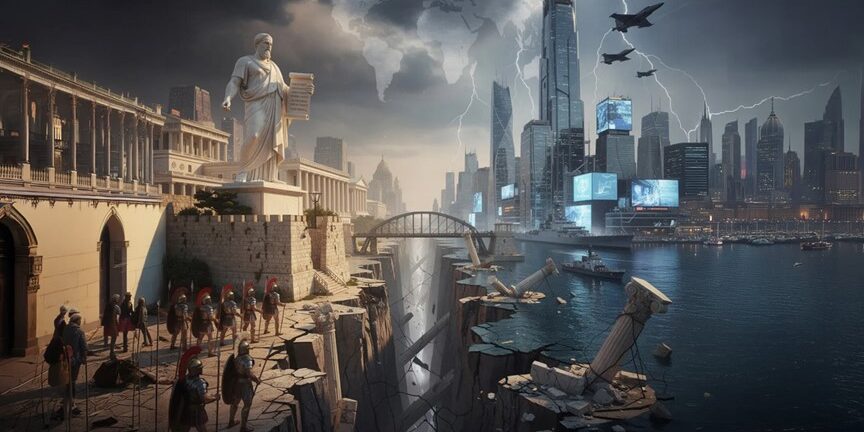
As he has done before, Xi evoked the Thucydides Trap this week to set out the dangers of confrontation between the US and China, a tacit warning to Trump to tread carefully around Taiwan. The concept, popularised by Harvard professor Graham Allison, describes the dangerous historical tendency for a rising power to come into conflict with an established hegemon as it challenges for primacy.
The Thucydides Trap refers to the Peloponnesian War in ancient Greece, a decades-long conflict that erupted between Athens and Sparta in 431BC. But the dynamic has led to war in 12 of 16 such transitions recorded over the past 500 years. More metaphorically, it captures the reasons why trade wars have erupted between the US and China as the latter has grown in economic stature and become more confident on the world stage.
Nixon aimed to tilt the balance of geopolitical power in the Cold War. Trump faces the challenge of projecting power in a multipolar world just as the deadlock in Iran highlights the limits of American hegemony. In this context, avoiding the Thucydides Trap is a constructive outcome. A stable, if competitive, US-China relationship would be supportive of global trade, technology investment and supply chain predictability, all of which underpin healthy equity markets.
“Can China and the United States transcend the so-called ‘Thucydides Trap’ and forge a new paradigm for major-power relations?”
– Chinese President Xi Jinping
“We are witnessing a historical change. I hesitate to put too much on this specific summit, but the inexorable rise of China to a place where it is legitimately rivalling the US – that is now happening before our eyes. Beijing is now the second world capital.”
– John Delury, a senior fellow from the Centre on US-China Relations at the Asia Society
Global News
- Trump and Xi began the second day of their Beijing summit on Friday as the two powers sought to stabilise relations amid rising geopolitical and economic tensions. Thursday’s talks focused on trade, Taiwan, artificial intelligence (AI) and Iran, with the leaders reaffirming last year’s trade truce and discussing rare-earth exports, AI restrictions and broader economic cooperation, while Xi warned that further US support for Taiwan could destabilise relations. Friday’s meetings are expected to focus on more concrete trade and energy agreements, including potential Chinese purchases of US agricultural products and oil, while discussions on Iran and keeping the Strait of Hormuz open to global shipping continue.
- US markets pushed to fresh highs on Thursday as continued optimism around AI demand extended the technology-led rally despite persistent inflation concerns and elevated Treasury yields. Nvidia and other semiconductor shares remained central to gains after Cisco issued a stronger-than-expected outlook linked to AI demand, reinforcing investor confidence in AI infrastructure spending and cloud-related growth. The rally also lifted Asian equities as markets continued to favour large-cap technology and chipmakers even as higher energy prices and inflation kept pressure on Fed interest-rate expectations.
- Negotiations to end the Iran war remained fragile on Thursday as tensions around the Strait of Hormuz continued disrupting global shipping and energy markets. Although Iran has reportedly allowed limited passage for some Chinese-linked vessels through Hormuz, continued restrictions and security incidents near the waterway have kept pressure on oil prices and transport costs. Pentagon officials also told Congress the war’s estimated cost has risen to nearly $29 billion.
- Oil steadied near $106 a barrel on Thursday after Trump and Xi discussed closer trade and energy ties during their Beijing summit, while the International Energy Agency (IEA) warned the oil market could remain undersupplied until October. Brent crude has risen about 45% since the Iran conflict disrupted supply, helping push the correlation between the Bloomberg Dollar Spot Index and Brent crude to its highest level since 2005 as oil prices and the dollar rise together amid heightened geopolitical uncertainty and inflation concerns.
- The US Senate confirmed Kevin Warsh as Chairman of the Federal Reserve on Wednesday, in a largely party-line vote, marking one of the most politically contentious leadership transitions in decades as Trump continues to challenge the central bank’s independence. Warsh is expected to pursue broader changes at the Fed, including adjustments to how the central bank communicates policy, regulates banks and manages its balance sheet. However, analysts and former officials said meaningful reforms could take time, given the Fed’s consensus-driven structure and the economic uncertainty linked to persistent inflation and the Iran war.
- Jerome Powell is leaving behind a deeply contested legacy as his term as Fed Chairman ends this week, with supporters crediting him for steering the US economy through the pandemic, inflation surge and banking stresses, while critics argue the Fed reacted too slowly to rising prices. His tenure was marked by aggressive interest-rate increases, growing political pressure and renewed debate over the Fed’s independence and communication strategy. Powell is expected to remain on the Federal Reserve Board.
- Trump’s decision to suspend the federal petrol tax could cost billions of dollars in lost monthly revenue, analysts said on Monday, as the administration released another 53.3 million barrels of oil from the Strategic Petroleum Reserve to help ease fuel prices following the US and Israeli attacks on Iran in February. The crude will be supplied between June and August, when refinery demand typically peaks, as part of an IEA-led effort to contain rising energy costs after average US petrol prices climbed above $4.50 a gallon for the first time since July 2022.
- Chinese exporters have begun raising prices in response to higher US tariffs and shipping costs, increasing the risk of a more expensive holiday shopping season for US retailers, industry executives, and importers said on Tuesday. Suppliers have increased prices across categories, including toys, electronics and household goods, as businesses pass through rising production and logistics costs linked to trade tensions and disruption around the Strait of Hormuz, with some importers reporting price increases of around 5% for large retailers and as much as 15% for smaller merchants.
- UK Prime Minister Keir Starmer is facing renewed political pressure as growing divisions within the Labour Party raise questions over the stability of his leadership. The resignation on Thursday of Health Secretary Wes Streeting paves the way for a potential leadership challenge following Labour’s heavy local election losses. The developments have increased political uncertainty in the UK as Labour faces mounting pressure over the economy and public services.
- Indian Prime Minister Narendra Modi urged households and businesses to reduce fuel consumption and revive work-from-home practices amid rising global oil prices, which are increasing pressure on India’s economy and foreign-exchange reserves. Modi also called for lower spending on foreign travel, gold, and imports, as higher energy prices linked to the Iran conflict added to inflation, current-account concerns, and the rupee. India, the world’s third-largest oil importer and consumer, said late last month there was no proposal to raise diesel and petrol prices despite the global surge in energy costs.
- Shares in Nvidia climbed 4.4% on Thursday, extending a seven-day rally to 20% as investors continued piling into AI-linked chipmakers benefiting from surging spending on artificial intelligence infrastructure. The gains added more than $900 billion to Nvidia’s market value, pushing the company closer to an unprecedented $6 trillion valuation. The rally has reinforced Nvidia’s dominant position at the centre of the global AI investment boom as hyperscalers continue increasing spending on data centres and computing capacity.
- Cisco gave a stronger-than-expected revenue and earnings forecast for the current quarter on Wednesday and announced plans to cut thousands of jobs as it shifts investment toward AI and other growth areas. The company projected quarterly revenue of about $17 billion and earnings ahead of analyst expectations, helping lift its shares after the update. Cisco said the restructuring is aimed at focusing the business on faster-growing AI-related opportunities.
- Google unveiled new AI features for its Android software and devices on Monday as the company moves to strengthen its position in the AI race ahead of Apple’s planned Siri overhaul later this year. The updates include deeper integration of Google’s Gemini AI assistant across Android smartphones, smartwatches and vehicles, with new capabilities focused on search, messaging and personalised recommendations. The launch highlights intensifying competition among major technology companies to embed generative AI more deeply into consumer devices and software ecosystems.
- LinkedIn is cutting jobs across several divisions as its parent company, Microsoft, continues a broader effort to reduce costs and streamline operations amid heavy investment in AI infrastructure. The layoffs, announced on Tuesday, are part of a wider wave of job cuts across the technology sector as companies redirect spending toward AI development and data-centre expansion. The reductions come despite continued growth in demand for AI-related products and services across the industry.
- As at Thursday’s close the S&P 500 was 1.38% up for the week.
Local News
- President Cyril Ramaphosa remains under political pressure following last week’s Constitutional Court ruling on the Phala Phala matter, but the ANC has rallied behind him as impeachment proceedings begin to take shape in Parliament. The ANC’s National Executive Committee on Wednesday instructed the party’s caucus to support Ramaphosa, while a 31-member Parliamentary inquiry committee prepares to consider the matter. Ramaphosa, who has denied wrongdoing over the 2020 theft of foreign currency from his Limpopo farm, said earlier this week that he would challenge aspects of the ruling and insisted he will not resign.
- Ramaphosa said on Tuesday that South Africa remains a safe long-term investment destination, citing infrastructure spending plans of more than R1 trillion over the next three years and ongoing structural reforms aimed at improving logistics, energy and transport networks. Ramaphosa said the government had secured about R890 billion in investment pledges at the recent South Africa Investment Conference and had set a new five-year investment target of R3 trillion.
- South Africa loses about R300 billion in tax revenue each year through illicit trade, tax evasion and weaknesses in revenue collection, according to estimates cited by the South African Revenue Service (SARS) and National Treasury. The losses span sectors including tobacco, alcohol, fuel, mining and imports, placing additional pressure on government finances as spending demands rise. SARS Commissioner Dr Johnstone Makhubu said on Monday that the illicit economy is estimated at between 10% and 15% of South Africa’s GDP.
- Makhubu said on Monday the tax authority is undergoing a major digital overhaul focused on AI, automation and data analytics to improve compliance and revenue collection. SARS plans to expand the use of machine learning, e-invoicing and real-time VAT data systems to detect fraud, combat illicit trade and streamline taxpayer interactions. The programme forms part of a broader modernisation strategy aimed at strengthening enforcement capacity and narrowing South Africa’s tax gap.
- Unauthorised, irregular, fruitless and wasteful spending by municipalities increased 1.5% to R268.13 billion in the 2024/25 fiscal year from a year earlier, National Treasury told Parliament on Thursday. National Treasury said many municipalities continue to struggle with poor revenue collection, weak internal controls and failures to submit credible financial statements on time despite repeated interventions. The department warned that persistent governance failures are undermining service delivery and infrastructure maintenance.
- Unemployment rose to 32.7% in the first quarter of 2026, with the number of unemployed people increasing to 8.4 million as job losses accelerated across trade, construction and manufacturing. Statistics South Africa said on Tuesday that employment fell by 291,000 jobs during the quarter, while the expanded unemployment rate climbed to 43.1%. Youth unemployment remained above 59%, reinforcing concerns over weak economic growth, low business confidence and South Africa’s ability to create jobs at scale.
- South Africa’s mining production edged higher in the first quarter of 2026 as stronger output from platinum group metals, iron ore and coal helped offset continued weakness in other commodities. Statistics South Africa data released on Thursday showed the sector remains under pressure from logistics bottlenecks, electricity constraints and operational challenges despite some improvement in export flows and rail performance. Economists said a sustained recovery in mining output will be important for exports, tax revenue and broader economic growth.
- Anglo American topped a R1 trillion market capitalisation on Wednesday as rising copper prices and growing investor demand for future-facing minerals lifted mining shares. Copper prices have climbed above $13,000 a tonne amid expectations of long-term supply shortages driven by electrification, grid expansion and demand for AI infrastructure. The rally comes as Anglo continues restructuring efforts aimed at increasing its exposure to copper and other energy-transition metals.
- Prosus expects revenue of more than $7.3 billion for the 2026 financial year as all its ecosystems return to profitability ahead of results due in June. The group said on Monday that free cash flow excluding Tencent continued to improve, while e-commerce adjusted EBITDA is expected to exceed $1.1 billion as it accelerates investment in AI-driven products and automation tools across its platforms. Separately, Prosus agreed to sell a 5% stake in Delivery Hero to Aspex Management for about €335 million, or roughly R6.5 billion, as part of commitments linked to its acquisition of Just Eat Takeaway.com.
- Canal+ confirmed on Tuesday it will begin trading on the main board of JSE on 3 June, becoming the first French company to secure a secondary listing on South Africa’s exchange following its takeover of MultiChoice. The group will retain its primary listing in London and trade locally under the share code CNP, with a market capitalisation of about R51 billion. The listing fulfils commitments made to the South African competition authorities following MultiChoice’s delisting in December 2025.
- KFC plans to create 3,500 jobs in South Africa this year as the fast-food group accelerates a rollout of 100 new stores across the country. The company said the expansion would also support about 10,000 indirect jobs in sectors including logistics and agriculture, while extending its footprint deeper into township and rural markets. Some 58 of the outlets will be in townships amid rising youth unemployment that remains above 45%.
- As at the time of writing, the rand was 1.7% weaker against the dollar, and the ALSI was 2.5% down for the week.
Sources: Dynasty, Bloomberg, CNN, Business Day, TechCentral, Reuters, Daily Investor, The Guardian, WSJ, etc.