The US dollar started 2026 in much the same way as it spent most of last year: under pressure. The American greenback had, until Wednesday, lost around 1.9% of its value against a basket of developed-market peers, and although having retraced 0.5% as of Friday, extended a slide that has gathered pace since Donald Trump returned to the White House as President.
Factors that are weighing on the dollar during the Trump 2.0 presidency include ongoing concerns over the Fed’s independence, the trajectory of US government debt and spending, and unpredictable policymaking. We have seen investors and central banks increasingly diversify from dollar-based assets into gold and other currencies.
The US Dollar Index is down 11% over the past year, but Trump told reporters on Tuesday that “the dollar’s doing great”. That caused the US currency to slump further. Trump also launched a fresh attack on outgoing Fed Chairman Jerome Powell on Thursday after the Fed held interest rates steady in its first meeting of 2026 on Wednesday.
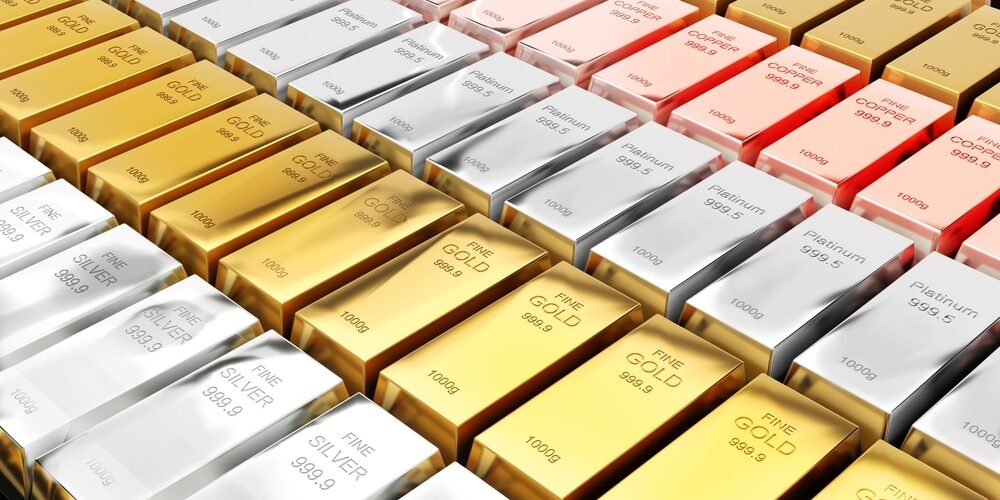
The weakening dollar, along with concerns about the US’ policymaking direction and ongoing geopolitical turmoil, contributed to a highly volatile week for precious metals. But continuing the trend of 2025, we are seeing risk assets like stocks rise alongside gold, the traditional safe haven and inflation hedge.
Gold is up 19% for the first month of 2026 and 86% over the past year. It reached a new high of $5,598 on Thursday before correcting to below $4,950 at one point on Friday morning. Platinum, meanwhile, gained more than 40% in January and 200% over a year, before correcting by 21% during this week, while silver had surged 68% for the month and 290% over the past year, before retracing nearly 22% from Thursday’s high to Friday’s low.
At the same time as precious metals have boomed, global equity markets are still prospering, and most segments of the commercial and residential property market are robust. The S&P 500 is up 1.9% for the year to date after notching up gains of 17.9% in 2025, while the MSCI World Index is up 2.7% so far this year following a 21% rise last year.
The synchronous rise in safe-haven and risk asset prices cannot be explained by dollar weakness alone and raises the question of whether we are deep into a new cycle of asset inflation or a bubble. Asset inflation refers to a sustained rise in the prices of assets such as equities, property, or commodities that outpaces inflation and growth in the real economy.
Is asset inflation something that should worry investors? History offers cautionary tales. Japan’s late-1980s asset bubble (baburu keiki) saw land and equity prices shoot up before collapsing into decades of stagnation. In the US, the pre-Global Financial Crisis housing boom inflated household balance sheets on the assumption that property prices would rise forever.
However, the circumstances today are not identical. It may well be that rising asset prices offer a counterweight to the elevated inflation of the post-pandemic years. They may be a means of preserving purchasing power rather than a sign of speculative excess. Asset inflation can coexist with deflationary pressures elsewhere in the system.
Indeed, there are some features of the current environment that suggest we are not necessarily in a broader asset bubble, perhaps outside of commodities. Although central banks are deep into the rate-cutting cycle, interest rates remain relatively high by post-2008 standards. Capital is by no means cheap, and cash is not trash.
Furthermore, banking systems are better capitalised and households in many developed markets are more cash-flush than over-indebted. In addition, equity market gains are concentrated in a relatively narrow set of tech companies that are riding the Artificial Intelligence (AI) wave and delivering consistently strong earnings.
In short, the scenario does not resemble the system-wide mania of Japan in the late 1980s. Nor does it necessarily look like the asset bubbles former Fed chair Alan Greenspan cautioned against in 1996, when he questioned whether “irrational exuberance has unduly escalated asset values”.
Even so, the market is not without risk. Whether asset prices keep running will depend heavily on macroeconomic conditions as well as the actions of an unpredictable US President. How Trump handles government debt and his nominated Fed successor, Kevin Warsh, will have a large bearing on asset prices in the year to come.
For emerging markets like South Africa, the upswing in resources is a welcome tailwind. Higher prices for gold, platinum and other resources support export revenues, fiscal balances and currencies, at least in the near term. But commodities markets are cyclical and it is not safe to assume that this cycle can keep running forever.
As legendary investor George Soros has argued, even a safe haven like gold can develop bubble-like characteristics. While increasing central banking gold buying and diversification from the dollar may suggest a structural shift, history shows that extended periods of strong returns can give way to long stretches of stagnation.
The recent spike in platinum prices followed a slump of nearly 18 years. The three-fold increase in gold prices over the past two and a half years should likewise be seen in the context of weak performance in the previous decade. Goldbugs saw virtually no returns from gold between 2011 and 2023.
As we move deeper into 2026, many familiar themes remain in play, including geopolitical strain and concerns about whether AI mega-cap stocks are overvalued and the risk of escalating trade wars. It may not be the case that most asset classes keep rising in unison or that they will all fall together in this world of multidimensional risk. A dynamic but disciplined approach remains the best way (in our view) to protect against sudden shocks and to capture future opportunities.
“The ultimate asset bubble is gold.”
– George Soros, investor and philanthropist
Global News
- The US dollar weakened this week despite today’s retracement, as investor fears of a long-term erosion in its purchasing power, the so-called “debasement trade”, outweighed efforts by US Treasury Secretary Scott Bessent to reinforce the administration’s strong-dollar policy.
- Gold surged to a record above $5,500 an ounce yesterday, extending a nine-day rally driven by a weaker dollar and investor flight from bonds and currencies. However, this Friday has witnessed a sharp decline in the price of bullion to around $5,109. Spot gold is up nearly 19% this year, supported by a weaker US dollar and investors’ moves away from sovereign bonds and currencies.
- Silver rose more than 14% intraday on Monday and briefly touched a record above $120 an ounce, but was down 12% on Friday, trading at $101 an ounce. Silver is now up by around 42% this year, as investors reacted to heightened volatility, concerns about currency debasement, and last week’s Japanese bond selloff.
- Copper surged by the most in more than 16 years on Thursday after heavy buying from Chinese investors drove a sharp rally on the London Metal Exchange. Prices jumped as much as 11%, briefly trading above $14,500 a ton for the first time, before pulling back later in the day.
- Brent crude futures settled above $70 a barrel yesterday for the first time since July, rising 3.4% for a third straight day after Trump warned Iran to strike a nuclear deal or face military action in a social media post. Trump’s post raised fears that conflict could disrupt Iranian exports or block the Strait of Hormuz, through which about a fifth of the world’s oil passes. Iran produces approximately 3.3 million barrels per day. Geopolitical tensions from Iran to Venezuela and a supply disruption in Kazakhstan have bolstered prices despite expectations of oversupply.
- Powell may leave office without further interest rate changes after the Fed on Wednesday held rates steady at 3.5% to 3.75%. Speaking after the decision in Washington, Powell pointed to improving US growth, easing inflation, and a steadying labour market. The Federal Open Market Committee voted 10 to 2 to pause. Futures markets expect no move before June, by which time Powell’s term as chair will have ended, and a successor will have been appointed. Following the announcement, the dollar held gains against the euro and the yen.
- Trump said yesterday, speaking during a Cabinet meeting at the White House, that he would announce his nominee to chair the Fed next week. He reiterated his expectation that the central bank’s new leader will lower interest rates as well as his view that US interest rates should be lower. Trump nominated Kevin Warsh on Friday morning.
- Britain and China hailed a reset in relations after PM Keir Starmer and President Xi Jinping yesterday pledged greater cooperation on trade, investment, and technology. Beijing offered 30 days of visa-free access to Britons and halved tariffs on whisky, while AstraZeneca announced a $15 billion investment in China. Starmer, seeking economic growth, discussed trade, security, Ukraine, and cultural ties with Xi. Both leaders said closer engagement would support dialogue and a long-term partnership after years of strained relations, even though Starmer‘s bid to tighten ties with China has drawn criticism from some British and US politicians.
- India and the European Union signed a long-delayed trade deal on Tuesday that will cut tariffs on most goods to boost two-way trade and reduce reliance on the US. The EU will eliminate or reduce tariffs on 96.6% of imports from India, while India will cut tariffs on 99.5% of EU goods over seven years. Agricultural items such as soya, beef, sugar, rice, and dairy are excluded, according to both governments.
- Following last week’s historic bond selloff in Japan, markets remained unsettled. On Tuesday, 30- and 40-year yields jumped above 4% following PM Sanae Takaichi’s stimulus plans ahead of the 8 February snap election. The selloff triggered sharp yen swings, pressured US Treasuries, and prompted speculation about intervention. Inflation, low liquidity, and potential repatriation of $5 trillion in foreign capital, along with carry-trade unwinds, are amplifying volatility.
- Germany’s central bank, the Bundesbank, holds one of the world’s largest gold reserves, valued at roughly $599 billion at current prices. A striking feature of these holdings is that more than 80 % of Germany’s official reserve assets are tied up in gold, making bullion by far the dominant component of its foreign reserves – far above cash or other reserve assets. That massive gold stockpile, accumulated over decades and stored in vaults in Frankfurt, New York and London, now represents a symbolic and financial anchor for Germany, even as commentators debate whether such a heavy concentration in a single, volatile asset remains prudent.
- Microsoft shares plunged as much as 11% to $429.24 yesterday, marking the company’s biggest intraday drop since March 2020, after earnings showed record spending on AI and slowing cloud growth. The selloff erased $357 billion in market value, the second-largest single-day loss in stock market history after Nvidia’s $593 billion rout last year after the launch of DeepSeek’s low-cost AI model.
- Meta reported better-than-expected holiday-quarter revenue on Wednesday and issued a strong sales outlook, easing investor concerns over its planned artificial intelligence spending. The company said improvements in its advertising business support plans for record capital expenditure in 2026, as it invests heavily in AI infrastructure and computing capacity. Meta’s shares rose more than 11% in extended trading after the earnings release, as the company reaffirmed its long-term AI strategy despite near-term pressure on costs.
- Amazon confirmed on Wednesday that it had cut 16,000 corporate jobs, bringing the total number of people let go to around 30,000 since October under CEO Andy Jassy’s plan to reduce bureaucracy and trim underperforming businesses. The company is also closing its remaining Fresh grocery stores and Go markets and dropping the Amazon One palm-payment system. While the cuts affect less than 2% of Amazon’s 1.58 million-strong workforce, they represent nearly 10% of corporate staff, with more adjustments possible as teams continue to “make adjustments as appropriate”.
- Apple reported record quarterly sales yesterday, with revenue up 16% to $143.8 billion for the period to 27 December 27, beating analyst estimates of $138.4 billion. Holiday demand was driven by strong iPhone 17 sales, service growth, and a rebound in China. For the second quarter through March, Apple expects revenue to rise 13% to 16%, above Wall Street’s 10% forecast. CEO Tim Cook warned rising memory prices and supply constraints for iPhone 3-nanometer chips and AirPods Pro 3 could weigh on margins. Shares rose less than 1% after hours.
- China has approved three of its largest tech firms – ByteDance, Alibaba, and Tencent – as buyers of Nvidia’s H200 AI chips, according to sources. This marks a policy shift as Beijing balances domestic development with AI needs. The approvals, granted during Nvidia’s CEO Jensen Huang’s visit to China this week, cover more than 400,000 chips but come with conditions and restrictions, and companies have not yet placed purchase orders.
- Advanced Semiconductor Materials Lithography – known as ASML – reported record fourth-quarter orders of €13.2 billion ($15.8 billion), beating expectations, and raised its 2026 outlook on Wednesday as AI chip demand surged. The Dutch chip equipment maker will cut 1,700 jobs, part of a plan to reduce 3,000 management posts while hiring engineers for innovation. CEO Christophe Fouquet said capacity hikes at TSMC, Samsung, and Micron drove orders. Shares initially jumped 6% but later fell 1.9%. The company also plans a €12 billion ($14.4 billion) share buyback through 2028.
- Tesla said on Wednesday it plans to spend about $20 billion this year, roughly double market expectations, to streamline its electric-vehicle lineup and shift resources toward robotics and AI. The company said the spending will support factory expansions, growth of its robotaxi business and AI infrastructure, while discontinuing the Model S and X, the two oldest vehicles in Tesla’s lineup, to free capacity for Optimus robots. Tesla shares rose 1.2% in extended trading in New York.
- SpaceX is exploring a potential merger with Tesla and an alternative combination with AI firm xAI, sources said yesterday. The deals could attract infrastructure funds and Middle Eastern sovereign investors and might require significant financing. Musk’s plans include using SpaceX’s orbital data centres to power xAI, solar energy from Tesla’s systems, and Starship rockets to deploy Tesla’s Optimus robots to the Moon and Mars. Tesla shares rose as much as 4.5% after hours, after falling 3.5% during normal hours, giving the company a market value of about $1.56 trillion.
- Novo Nordisk dramatically increased US advertising for its GLP-1 drugs Wegovy and Ozempic in the first nine months of 2025, spending nearly $500 million, more than twice the roughly $214 million that rival Eli Lilly spent promoting its obesity and diabetes drugs, according to ad-tracking data seen by Reuters on Wednesday. Novo’s spending on Wegovy rose about 54%, and on Ozempic about 44% year-on-year as supply improved following shortages. Despite heavy marketing, inconsistent insurance coverage means many patients still pay out-of-pocket, and experts say prescribing decisions should stay between doctors and patients.
- Toyota retained its position as the world’s largest carmaker in 2025, posting record global sales of 11.3 million units, up 4.6% from the previous year, and production up 5.7%, the company said yesterday. Sales of Toyota and Lexus vehicles in the US rose 8%, aided by renewed interest in gas-electric hybrids, while Japanese sales grew 12%, accounting for about 18% of the global total. The results underscore Toyota’s resilience despite Trump’s 15% US tariff on Japanese cars and growing competition from Chinese manufacturers.
- As at Thursday’s close the S&P 500 was 0.77% up for the week.
Local News
- Surging metal prices and a strengthening rand pushed South Africa’s FTSE/JSE All Share Index to a record high, rising more than 1% this week before retracing on Friday to be 0.7% down for the week at the time of writing.
- The rand strengthened below R16 to the dollar for the first time since June 2022, touching as strong as R15.70, supported by a broader “dollar debasement” trade that has lifted emerging-market currencies, equities, and gold. The currency is now up more than 3% in 2026, following a 14% rally last year, as easing inflation, lower interest rates, and improving global risk appetite drive renewed demand for higher-yielding assets. Reflecting this improved sentiment, South Africa’s 10-year government bond yield fell to 8.15%, its lowest level since September 2019.
- The South African Reserve Bank kept its benchmark interest rate at 6.75% yesterday, pausing its easing cycle amid a slightly cooler inflation outlook. The six-member Monetary Policy Committee vote was split, with four in favour of a hold and two preferring a 25bps cut. Governor Lesetja Kganyago said December’s 3.6% inflation reading is expected to be the peak, though food and electricity costs remain a risk.
- SARS commissioner Edward Kieswetter on Tuesday warned that South Africa is losing ground to criminal syndicates, with illegal cigarettes now accounting for about 75% of the market, severely damaging the tobacco industry. He said illicit trade, including tobacco, smuggled gold, fuel adulteration, and counterfeit goods, has become entrenched, costing the state tens of billions in lost tax revenue. While SARS and law-enforcement agencies have recovered R85 billion since 2020/21, the problem persists.
- Tourism Minister Patricia de Lille on Monday said South Africa is moving from COVID‑19 recovery to expansion, after a record 10.485 million international visitors in 2025, 17.6% higher than 2024 and 2.6% above 2019 levels. Tourism supports 1.8 million jobs, with new initiatives to strengthen the sector and bring in more visitors, including the Electronic Travel Application rollout, coordinated marketing, safety improvements, and infrastructure investment. South Africa also secured 51 business events last year, projected to inject R894.5 million into the economy.
- Chinese new-vehicle sales in South Africa jumped 74.4% year‑on‑year, driving a rapid shift in the local car market and outpacing traditional Japanese, European, and US brands. Used-car dealer WeBuyCars on Tuesday said buyers are favouring affordable, feature-rich Chinese models amid lower inflation and interest rates, with new-vehicle registrations up 11.9% in 2025 compared with 2024.
- Pan African Resources declared its first interim dividend of 12 cents a share after gold prices surged past $5,000 an ounce, boosting earnings and cash flow. The group produced 128,296 oz of gold in the six months to December, a 51% year-on-year increase, helping cut net debt by more than 65% and putting it on track to be debt-free by February 2026. The news lifted the share price about 5.5%, with the company also flagging potential expansion of its R2.8 billion Soweto Cluster project as strong gold prices continue to support growth.
- Woolworths shares fell about 6% yesterday after the company’s interim results disappointed the market, with the expansion of its distribution centre biting into margins. The distribution centre investment increased depreciation costs, which weighed on the group’s near‑term gross profit margin, even as turnover and concession sales grew in both South Africa and Australia. Woolies’ Food, Fashion, Beauty and Home segments saw sales increases, supported by value‑chain improvements, but the margin impact helped drive the share price decline.
- As at the time of writing, the rand was 1% stronger against the dollar, and the ALSI was 0.7% down for the week.
Sources: Dynasty, Reuters, Bloomberg, BusinessDay, CNN, Business Report, ITWeb, Trading Economics, etc.