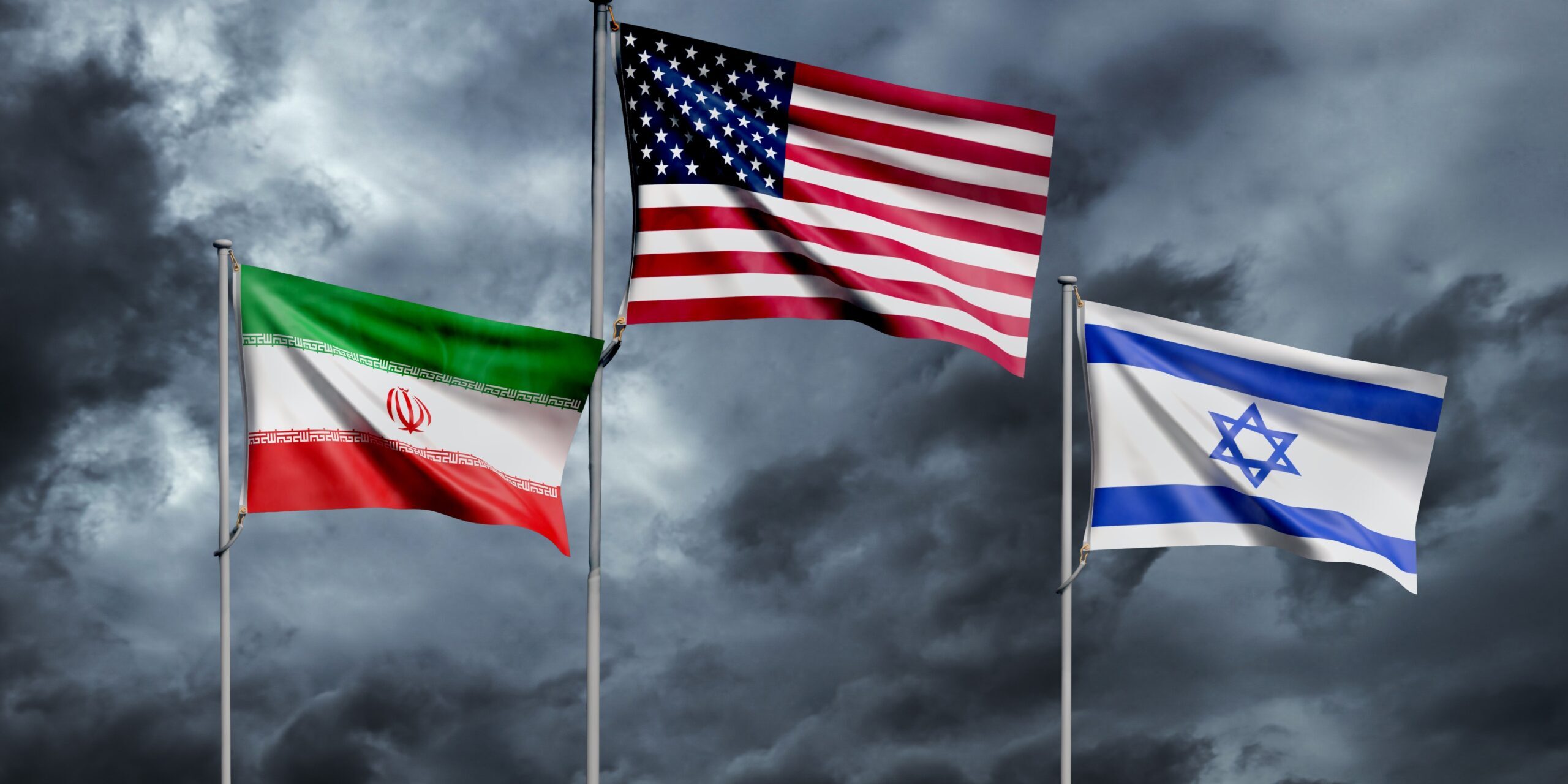
Three weeks into the US-Israel military campaign against Iran, the conflict appears to have entered a dangerous new phase. Israeli strikes on South Pars, the world’s largest natural gas field, prompted Tehran to retaliate with attacks on energy infrastructure across neighbouring Gulf states.
Markets responded swiftly to the prospects of a wider regional war and prolonged disruption in global energy markets. Brent crude climbed to nearly $120 a barrel again yesterday, before moderating to around $107. European natural gas futures soared more than 25% meanwhile, reaching their highest levels in over three years.
Now that the economic toll of the war is becoming clear, the question remains: when will it end? Indeed, few nations in the world will be able to avoid short-term pain from the conflict. Higher energy costs are already manifesting at the pump in most countries and central banks look set to stall interest rate cuts in anticipation of higher inflation. In fact, central banks have this week raised the prospect of hiking rates as they lament the pending impact on inflation.
If the war drags on, it will eventually squeeze corporate margins, dampen consumer spending and drag down economic growth. Despite considerable natural gas and domestic oil resources, the US is not immune to rising fuel and energy costs. With midterm elections looming in November, US President Donald Trump is acutely aware of this.
History shows that voters punish incumbent presidents when they pay more for fuel. Gerald Ford, Jimmy Carter, and George H.W. Bush all lost office after oil price hikes. The war is more unpopular with American voters than any recent conflict, which may make them even less willing to make sacrifices. We question if a sense of political self-preservation may well come into play in the weeks ahead.
Trump’s frantic social media postings and renewed exhortations to the Fed to cut interest rates suggest he is watching market indicators as closely as military briefings. From Washington’s perspective, a prolonged Middle East entanglement sits uncomfortably alongside its strategic priorities in China.
The US is sharing the growing military cost of the campaign only with Israel. Traditional partners in Europe and Asia have declined to assist in reopening the Strait of Hormuz – a consequence of Trump’s disparagement of the US’s allies, their reluctance to get dragged into an Iraq-type quagmire and Trump’s decision to move on Iran without consulting them.
Like the US, Iran has ratcheted up the hawkish rhetoric over the past week. But just like the US, Tehran may be ready for a quiet exit from the war sooner rather than later. Even the hardline leaders who have replaced the previous upper echelon killed in US-Israeli airstrikes cannot absorb indefinite punishment. An overplayed and prolonged Iranian card may lead other oil-producing countries to develop alternative supply chains. Indeed, this would be a prudent risk management strategy.
Iran’s military has been severely degraded, and its economy faces years of reconstruction. Its regional standing has deteriorated. The longer the conflict continues, the more Gulf neighbours’ resolve against Iran will harden. For Iranian leaders, a sense of self-preservation may also ultimately prove more powerful than ideology.
We believe one likely outcome is an uneasy return to the pre-war status quo, allowing both sides to save some face and claim a measure of victory. In this scenario, a weakened Iran would probably pursue its nuclear ambitions covertly and continue sponsoring regional proxies.
Israel and the US appear unlikely to achieve the aim of catalysing regime change in Iran. However, Trump could claim to have defanged Iran’s military and derailed its nuclear programme for years. Iran, in turn, may not get the reparations it is demanding, but could see some sanctions eased. Open conflict would subside, but with risk of future flare-ups.
This is, of course, one scenario among several, and significant uncertainty remains. Further escalation, particularly continued disruption to Hormuz shipping lanes or more severe damage to oil and gas infrastructure, would be materially negative for inflation, interest rates, global GDP growth, and equity markets.
The sooner this conflict winds down, the sooner energy prices and supply chains will be able to commence reparations. If self-preservation prevails, markets may resume the broadly positive trajectory we saw before war broke out. Conversely, every week of infrastructure damage and energy supply disruption extends the timeline for recovery and keeps upward pressure on inflation and rates and downward pressure on markets – gold and precious metals being the particular victims this past week.
“Self-preservation is the first law of nature.”
– British novelist and critic Samuel Butler, 1835-1902
“There is no instance of a nation benefitting from prolonged warfare.”
– Sun Tzu
Global News
- The Islamic Republic targeted sites in countries including Saudi Arabia, Qatar and the UAE during a wave of drone and missile fire on Thursday, a retaliation for Israel’s assault on the giant South Pars gas field the previous day.
- The shutdown of Qatar’s Ras Laffan plant after Iranian strikes has removed about 17% of global liquefied natural gas supply, triggering what analysts yesterday warned could become a prolonged global gas crisis. With the Strait of Hormuz effectively closed and no spare capacity or reserves, shortages are already hitting Asian economies and pushing prices sharply higher. A disruption beyond one month would create a supply deficit, while longer outages risk demand destruction, increased coal use, and a shock potentially exceeding the 2022 energy crisis.
- Israeli PM Benjamin Netanyahu said on Thursday that Israel will avoid further attacks on Iran’s energy infrastructure. The decision comes after US pressure to limit escalation, particularly as attacks on oil and gas facilities risked disrupting supply and pushing prices higher. Netanyahu said Israel would continue targeting military and strategic threats while stepping back from energy assets to reduce broader economic fallout. The shift signals an effort to contain the conflict’s impact on global energy markets and limit further pressure on oil prices and investor sentiment.
- Trump is struggling to control the narrative around the war with Iran, according to a Reuters report published yesterday, as inconsistent messaging and conflicting accounts have undermined his administration’s position despite military progress. Trump said he had no prior knowledge of the Israeli strike on Iran’s South Pars gas field. Still, officials later indicated the attack had been coordinated with Washington, highlighting communication gaps. The shifting explanations come as the administration faces growing political pressure over the conflict’s economic and geopolitical impact, complicating efforts to maintain public support and investor confidence.
- There are no clear or low-risk options for addressing Iran’s nuclear programme, an editorial in The Economist argued last Thursday, as both military action and diplomacy carry significant trade-offs. While recent US and Israeli strikes may have disrupted Iran’s capabilities, they could also increase Tehran’s incentive to pursue nuclear weapons as a deterrent if the regime feels threatened. A diplomatic solution would likely require sanctions relief in exchange for strict limits and inspections, but trust between the parties remains weak.
- As part of efforts to combat rising energy prices, Trump temporarily waived a century-old shipping mandate, the Jones Act, to lower the cost of transporting oil, gas and other commodities around the US. However, the US said yesterday that it is not planning to impose restrictions on US oil and gas exports, easing market concerns that had contributed to recent volatility in energy prices.
- Heads of government in Germany, Greece, Norway, Poland and France said this week they will not support US military operations linked to Trump’s war with Iran, widening divisions within NATO nearly three weeks into the conflict. The stance follows Trump’s weekend push for allies to help protect commercial shipping in the region. German Chancellor Friedrich Merz said on Wednesday there was no clear plan for how the war would succeed, reinforcing Europe’s refusal to participate militarily.
- Trump signalled on Monday that he may delay a planned summit with Chinese President Xi Jinping scheduled for 31 March to 2 April, citing the war with Iran and the need to remain in Washington. The remark followed Trump’s weekend calls for China and other countries to help address disruptions to regional shipping since the conflict began on 28 February.
- Russia has increased crude shipments in response to surging oil prices. A US waiver allowing buyers to purchase Russian crude loaded before 12 March pushed export revenues to about $1.38 billion a week, the highest level since October.
- Fed officials held interest rates at 3.5% to 3.75% on Wednesday, maintaining expectations for one rate cut in 2026 as policymakers flagged increased uncertainty linked to the Middle East conflict. Updated projections showed inflation rising to 2.7% next year. At the same time, Chairman Jerome Powell said progress on lowering inflation would be needed before any easing, noting the uncertain impact of the war on the economy. Morgan Stanley has joined Goldman Sachs in shifting its rate cut forecast to September from June.
- Powell said on Wednesday he intends to remain in his role despite mounting political pressure, as tensions with the Trump administration escalate over a Justice Department probe into the Fed’s headquarters spending. The standoff comes as Trump pushes for lower rates, while the Fed keeps policy steady amid persistent inflation and geopolitical uncertainty, including the Iran war, underscoring its commitment to independence.
- Major central banks signalled a cautious stance as the Iran war clouds the global outlook, with the European Central Bank holding its key rate at 2% yesterday, warning that higher energy prices could lift inflation toward 4% and raise the prospect of rate hikes if second-round effects emerge. The Bank of England also kept rates on hold at 3.75% on Thursday, despite easing wage pressures, as rising energy costs shift the focus back to inflation risks, with policymakers warning that borrowing costs may stay higher for longer and that inflation could reach 3.5% in the next six months. Meanwhile, the Bank of Japan left its policy rate unchanged at 0.75%, citing uncertainty from the conflict and signalling it could still raise rates if inflation forecasts are met.
- The Pentagon is preparing to replace AI systems from Anthropic, Chief Digital and AI Officer Cameron Stanley said on Tuesday, following a dispute over how the military can use the technology. The conflict centres on Anthropic restricting certain applications, including those linked to surveillance and defence operations, prompting US officials to seek alternative providers, although replacement may be complex given existing integration. The situation highlights growing tension between governments and AI companies over control, ethics and national security. Nearly 150 retired federal and state judges filed a friend-of-the-court submission on Tuesday supporting Anthropic in its lawsuit over its designation as a “supply chain risk”.
- Nvidia said on Monday it expects to generate about $1 trillion in revenue from its AI chips by 2027, reflecting strong demand driven by global investment in AI infrastructure. CEO Jensen Huang said the forecast is supported by orders for its latest Blackwell and upcoming Rubin chips, as companies expand data centre and AI computing capacity. Nvidia also said yesterday that it plans to supply one million GPU chips to Amazon’s cloud division by 2027. The outlook highlights Nvidia’s central role in the AI ecosystem and signals continued strength in semiconductor and broader technology sector growth.
- Samsung Electronics and AMD have deepened their AI push, signing a deal on Wednesday to expand the supply of memory chips for data centres. The partnership will see Samsung provide next-generation high-bandwidth memory for AMD’s upcoming AI accelerators, underscoring intensifying competition with Nvidia. The agreement also opens the door to potential foundry collaboration, as chipmakers race to secure supply chains amid surging AI demand and tightening availability of advanced memory.
- Elon Musk said on Wednesday that Tesla and SpaceX AI will continue ordering Nvidia chips at scale, underscoring sustained demand for AI hardware. Tesla is also developing its next-generation AI5 chip to power autonomous driving, robots and data centre training. Musk added that a wider release of its Full Self-Driving software is expected within weeks, while its AI chip manufacturing project is set to launch shortly.
- Chinese smartphone and EV giant Xiaomi revealed on Wednesday that a powerful AI model released anonymously last week was in fact its own, ending speculation that it was an early DeepSeek system. The model, an internal version of its MiMo-V2-Pro, signals China’s accelerating push into advanced AI agents. Xiaomi shares rose as much as 5.8% after the disclosure, highlighting strong market interest in next-generation models amid intensifying competition in the global AI race.
- Meta Platforms will spend up to $27 billion over the next five years on AI infrastructure from cloud provider Nebius Group as the company ramps up computing capacity to develop advanced AI models. Nebius said on Monday it will supply $12 billion of dedicated capacity from early 2027, with Meta committing to buy up to $15 billion more for shared infrastructure. The deal underscores the scale of technology investment in AI as major companies race to expand data centre capacity.
- Apple on Thursday posted a 23% surge in China smartphone sales in the first nine weeks of 2026, outperforming a market that declined 4% as rising memory chip costs pushed Android rivals to raise prices. The gains were driven by discounts and subsidies, with Apple absorbing cost pressures to defend market share, while competitors test higher pricing amid a broader cost squeeze across the sector.
- As at Thursday’s close the S&P 500 was 0.4% down for the week.
Local News
- South Africa’s fragile economic recovery is facing renewed pressure after oil prices surged more than 40% following the Middle East conflict, setting up potential fuel price increases of up to 23% in April and pushing inflation from 3% in February to about 4.5%, which may delay near-term rate cuts and weigh on growth, according to economist reports and announcements from National Treasury this week.
- The Bureau for Economic Research (BER) said on Wednesday that the government of national unity must prioritise infrastructure delivery, protect key institutions and align around a shared reform agenda to unlock sustained growth. Drawing on international case studies, the BER said countries that implemented visible, sequenced reforms saw sharp gains in GDP and employment, while South Africa’s per capita income has stagnated. With unemployment above 32%, it warned that the urgency of reform – and its potential payoff – is significant.
- National Treasury on Wednesday outlined a reform plan to address spending failures in metropolitan municipalities, aimed at improving service delivery and unlocking infrastructure investment. The proposals focus on strengthening how cities manage revenues from water, electricity, and sanitation, which are often diverted from maintenance and have contributed to infrastructure decline.
- Eskom warned on Wednesday that municipal debt could rise by about R240 billion over the next five years to R358 billion if no action is taken to rein it in, posing a growing risk to the power sector. Debt is already projected at R116.2 billion by the end of March, and the utility said the trend threatens its plans to unbundle operations, with distribution restructuring dependent on improving municipal payment performance.
- Manufacturing business confidence fell sharply in the first quarter as weak domestic demand and softer export prospects weighed on the sector. The Absa manufacturing index dropped nine points from the previous quarter, as data out on Monday showed, with declines across sales volumes, orders and selling prices. Domestic and export orders dropped, reflecting subdued demand at home and abroad. The survey was conducted between 12 and 23 February among about 700 manufacturers.
- Inflation slowed to 3% year-on-year in February from 3.5% in January, reaching the South African Reserve Bank’s target, Statistics South Africa said on Wednesday. The reading came in below the 3.1% median estimate in a Bloomberg survey of economists. Despite the easing, the central bank is expected to keep its benchmark interest rate unchanged at 6.75% when policymakers meet on 26 March as officials assess risks from rising global energy prices and a weaker rand.
- South Africa’s automotive sector is coming under growing pressure from a surge in cheaper vehicle imports from China and India, threatening jobs and investment in key manufacturing hubs. Local producers, including Volkswagen and Ford, this week warned that rising costs, weak infrastructure and policy constraints are eroding competitiveness, with some companies cutting jobs or delaying investment decisions. Industry players are calling for urgent policy changes to level the playing field.
- Major banks said this week that a sharp rise in gambling activity is increasingly straining household finances and raising credit risk, with lenders now incorporating betting behaviour into affordability and lending assessments. National Gambling Board data show that about R1.5 trillion was spent on gambling in 2024/25, while Old Mutual research indicates that around 40% of working South Africans gamble regularly, often to cover income shortfalls. Banks such as Absa say gambling trends are a strong predictor of financial distress and loan delinquency, with higher indebtedness closely linked to increased betting activity.
- As at the time of writing, the rand was 1% stronger against the dollar, and the ALSI was 2% down for the week.
Sources: Dynasty, Bloomberg, Reuters, The Economist, Business Day, CNN, Daily Maverick, Moneyweb, IOL, etc.