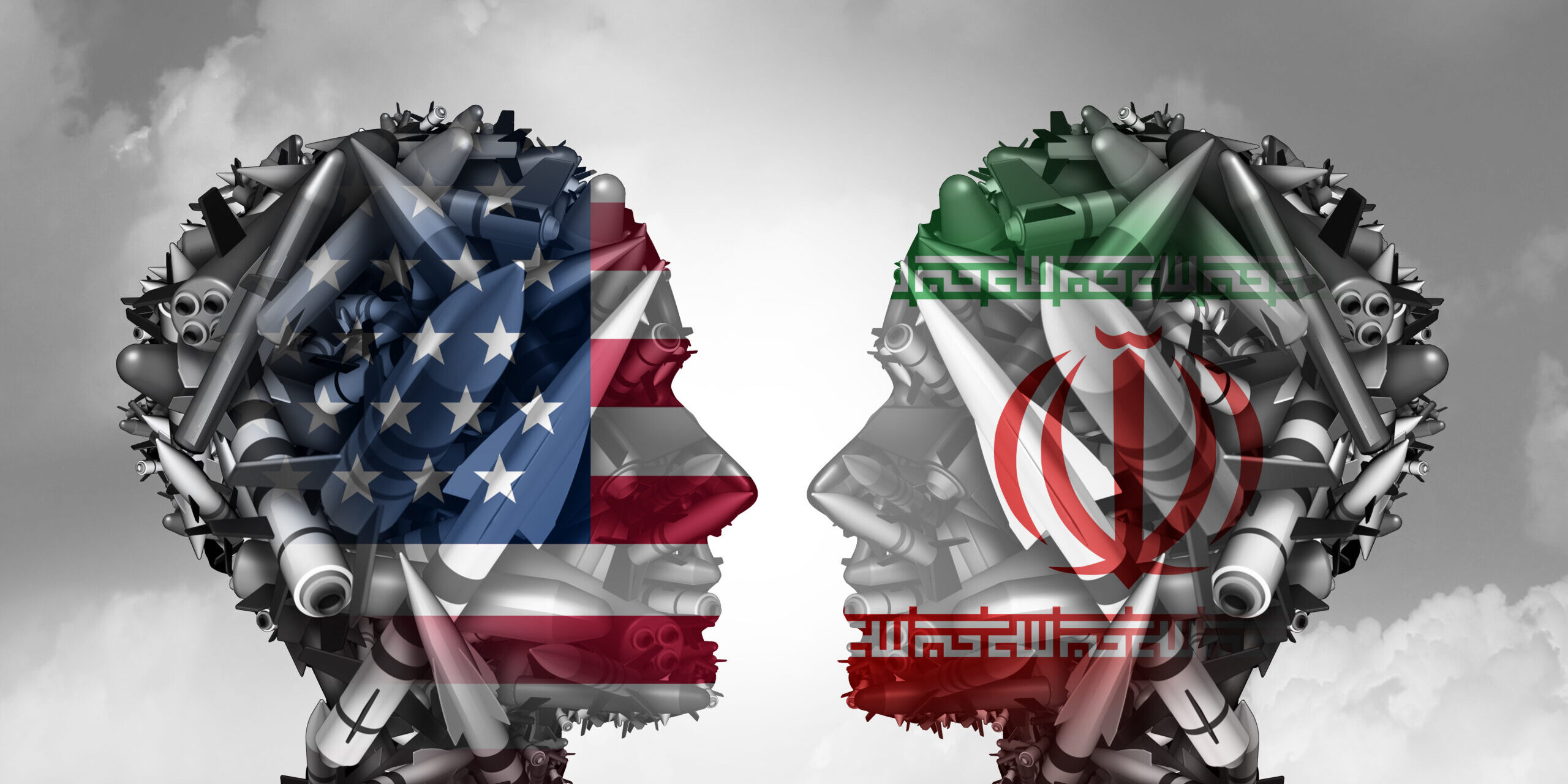
On 28 February, the United States (US) and Israel launched a wide range of coordinated strikes on the Iranian military as well as political targets. Iran responded shortly thereafter with attacks across the Gulf States and Israel.
According to The Economist, Israel’s objective in the war is clear: to eliminate the threat posed by Iran’s regime. By contrast, President Donald Trump and his administration have offered shifting explanations for the conflict, variously citing Iran’s missiles, its nuclear ambitions, and the possibility of regime change.
The Economist also observes that one face of the war is operational. The US and Israel have destroyed a significant portion of Iran’s military capability and are now targeting the regime itself with sustained force. Their dominance of the skies means that American and Israeli forces can fight at will.
The other face of the war is political, reflected in Iran’s strategy of sowing doubt and confusion. For the regime, simply surviving would count as a form of victory. So far, it has shown resilience: rather than collapsing, it has escalated the conflict by striking across the region, drawing Gulf states into the confrontation and effectively shutting off the Strait of Hormuz, through which about 20% of the global oil supply normally passes.
The risk is that Trump may be unwilling to step back as long as markets and opinion polls deny him the credit he believes he deserves, a dynamic that could persist as long as Iran continues to launch sporadic missiles and drones. Even then, the surviving regime may still refuse a nuclear deal, leaving the country in chaos and vulnerable to tensions among its many ethnic minorities.
The initial response by financial markets (in the US) to the start of the Iran war was the combination of a slightly weaker equity markets, the buying of some “safe haven” assets such as the US dollar, a slight upward drift in US bond yields, and a sharp rise in the oil price. Since then, most of these trends have continued, although in some instances the market’s reaction has become a little more pronounced.
For example, the S&P 500 equity index is down only 0.7% since 28 February, the US 10-year bond yield has weakened by 10bps but is still well below the yield at the start of February, the dollar has strengthened by 2% against the euro, but the oil price has risen by a hefty 20%. Understandably, it is the sharp increase in the oil price which is more concerning investors.
In other countries, the gyrations in financial markets have been much more severe, but overall, the rise in the oil price and its implications for inflation, growth and interest rates are dominating most market conversations – with the clear understanding that the longer the Iran war lasts and the more it spreads to other countries, the more severe the implications become.
Since 28 February, the rand has weakened by around 4.5% against the dollar and is down 2.5% on a trade-weighted basis. In comparison, the emerging market currency index has depreciated by a more modest 1.4% over the same period.
Interestingly, the rand is the third-worst-performing emerging market currency in March. This is largely understandable given the country’s vulnerability to a spike in international oil prices, as well as the fact that the rand is a highly tradable and liquid emerging market currency that tends to quickly reflect changes in global investor sentiment.
There remains a myriad of scenarios regarding the outcome of the Iran war, although the key uncertainty is the duration of the conflict. The longer the war persists, the more disruptive it will be to financial markets and the more likely it is to accelerate capital outflows from higher-risk investments (including emerging markets) toward traditional safe-haven assets.
However, our base case scenario is that America, Israel and the Gulf states do not seek a protracted conflict, and although the outcome of the war will most likely not lead to a ‘high road’ scenario, Iran will have been significantly weakened militarily, and its existential threat to Israel and US interests will, for the time being, be significantly diminished.
“History is littered with numerous meaningful events that were seen as near cataclysmic at the time but ultimately were not detrimental for markets in the long-term.”
– Jason Pride, chief of investment strategy and research at Glenmede
“The US dollar is no longer an effortless haven, but the nature of the current shock allows it to behave like one again.”
– TD Securities strategists Jayati Bharadwaj and Linda Cheng
Global News
- Trump said on Monday the bombing campaign against Iran could continue for weeks and called on Iran’s leaders to surrender or step aside, signalling support for a leadership change even as Tehran rejected negotiations and vowed to resist. The escalation follows US-Israeli strikes that killed Iran’s Supreme Leader and Cleric, Ayatollah Ali Khamenei, triggering retaliatory missile attacks across the Middle East and raising fears of a broader regional conflict. The fighting has disrupted air travel, heightened geopolitical tensions and pushed oil prices sharply higher as markets assess the risk of prolonged instability in a key energy-producing region.
- Shipping traffic through the Strait of Hormuz, one of the world’s most critical energy chokepoints, slowed to a near standstill on Wednesday as escalating conflict involving the US, Israel and Iran disrupted vessel tracking through signal jamming and disabled transponders, creating what analysts described as a “digital fog” over the waterway. Only a handful of ships were seen leaving the Persian Gulf and virtually none entering, highlighting the scale of disruption along a route that normally carries about 20% of global oil and liquefied natural gas supplies, pushing oil prices higher and raising concerns about supply shortages and broader economic fallout if the conflict persists.
- The Iranian conflict, as of Thursday, now poses the biggest food security test for Gulf states as shipping disruptions, particularly through the Strait of Hormuz, threaten supply routes for countries that import about 80% to 90% of their food. While governments have built strategic stockpiles and invested in overseas agriculture since the 2008 food crisis to strengthen resilience, the conflict highlights the region’s continued vulnerability to maritime disruptions, with prolonged instability likely to push up food costs and strain supply chains.
- US military forces are using AI tools to process vast amounts of battlefield data during operations against Iran, highlighting the technology’s growing role in warfare. US Central Command said on Thursday that AI is helping analysts screen incoming information and identify points of interest so human experts can focus on verification and operational decisions. This partially explains why the Nasdaq has actually risen by 0.24% as at Thursday’s close.
- Data centres are emerging as a potential strategic target in the Middle East conflict after drone strikes damaged three Amazon Web Services facilities in the region, two in the United Arab Emirates and one in Bahrain, causing power outages and cloud service disruptions. The incident forced Amazon to reroute workloads and advise customers to shift operations to other regions, highlighting the vulnerability of critical cloud infrastructure as technology companies expand data and AI capacity across geopolitically sensitive areas.
- Turmoil in the Middle East is pushing investors toward traditional safe-haven assets as they weigh inflation risks and potential disruption to global supply chains. Yet the market response to the war has been uneven. Over the past week, the US dollar has strengthened, with the dollar index up 1.5% as of yesterday afternoon as investors seek cash liquidity. Government bonds have failed to attract the usual safe-haven flows, with markets focusing instead on the inflation outlook as oil prices surge. Gold has swung sharply but remains above $5,000 an ounce, with some analysts expecting it could reach $6,000 this year.
- As of this morning, the US dollar was heading for its biggest weekly gain in more than a year as investors shift into safe-haven assets amid the escalating Iran conflict. The dollar index is up about 1.4% this week, its strongest rise since November 2024.
- US oil futures surged to the highest level in about 20 months late yesterday as investors priced in prolonged disruption to Middle East energy supplies. Brent crude ended above $85.00. The spike comes as traffic through the Strait of Hormuz has collapsed amid the Iran conflict.
- US Treasury Secretary Scott Bessent said on Tuesday that Trump’s plan to increase a universal tariff from 10% to 15% will likely be implemented this week. The 10% levy was introduced last month after the Supreme Court invalidated much of Trump’s previous tariff regime, and can remain in place for 150 days. During that period, US trade authorities are expected to examine other legislation to restore the earlier tariff framework.
- US private companies added 63,000 jobs in February, the most since July and above the 50,000 increase expected by economists, ADP Research data showed on Wednesday. The report adds to evidence that the labour market is stabilising after near-zero job creation in 2025. A year into Trump’s second term, some employers are ramping up hiring now that there’s more clarity around his economic policies. Tax cuts could also provide a boost to investment and job growth.
- Euro-area unemployment fell to a record low of 6.1% in January from 6.2% in December, Eurostat said on Wednesday. The labour market has been supported by stronger-than-anticipated economic growth at the end of 2025, driven by Spain and a return to expansion in Germany, with inflation near 2% and stable interest rates also helping. However, the outlook has become more uncertain amid shifting US tariff policy, higher energy prices linked to the Iran war and tensions after Trump suggested a possible trade embargo against Spain.
- China on Thursday outlined a new five-year plan focused on strengthening technological self-reliance and upgrading key industries as rivalry with the US intensifies. The strategy prioritises areas such as AI, semiconductors, robotics, biotech and advanced manufacturing, with higher spending on research and development aimed at reducing reliance on foreign technology. The plan also aims to boost domestic consumption and support more sustainable growth while tackling structural challenges such as a weak property sector and an ageing population, with China targeting economic growth of about 4.5% to 5% in 2026.
- Wall Street investors are shifting their AI strategy from early winners such as chipmakers and cloud providers to identifying the next “blockbuster” companies that could use AI to disrupt industries. The focus is increasingly on firms in sectors such as software, finance, healthcare and media that can use AI to automate complex tasks, cut costs and develop new products. Economists say AI is likely to boost long-term growth through higher worker productivity, though investors remain cautious about potential disruption along the way. US labour productivity rose 2.8% last quarter and has averaged the same pace since 2023, more than double the rate seen in the decade before 2019.
- Anthropic said yesterday it will challenge a US Defence Department decision to designate the company a supply-chain risk, following a dispute over safeguards for the military use of its AI models. Despite the decision, Anthropic’s Claude AI tools are still being used by US military systems supporting operations against Iran. Anthropic is on track to generate almost $20 billion in annual revenue based on its current run rate, more than doubling from about $9 billion at the end of 2025, sources said on Tuesday.
- Apple on Tuesday updated its MacBook Air and MacBook Pro laptop lines with faster M5-series processors. The new MacBook Air and MacBook Pro look identical to their predecessors but add significantly faster processors, improved storage configurations and better graphics. Prices also increased across the lineup as the company faces an industrywide memory-chip shortage, with the 13-inch MacBook Air now starting at $1,099, up from $999. This was followed by a Wednesday launch of the MacBook Neo, its cheapest laptop yet, starting at $599. The device is the first MacBook to run on an iPhone-class chip, as it targets more price-sensitive consumers.
- As at Thursday’s close the S&P 500 was 0.7% down for the week.
Local News
- Stronger public finances have given the country a cushion to absorb external shocks such as fallout from the Iran conflict, Treasury Director-General Duncan Pieterse said on Monday. For South Africa to be pushed off this path of fiscal consolidation, revenue would either have to fall by R60 billion or government spending jump by the same amount, Pieterse said. National Treasury projects a primary surplus of R60 billion more in 2027 than this year. However, Pieterse warned last Friday that weak household finances, slow economic growth and an already stretched tax base pose longer-term risks to fiscal sustainability.
- President Cyril Ramaphosa said on Wednesday South Africa would be willing to play a mediating role in the Middle East conflict if asked. Speaking on the sidelines of an energy conference in Cape Town, Ramaphosa said South Africa would support efforts to secure a ceasefire and promote dialogue to end the war. He also said government was working to bring South African citizens stranded in the region home.
- The Bureau for Economic Research’s latest business confidence survey, released on Wednesday, showed sentiment rising in the first quarter to the highest level since 2015, excluding the post-COVID rebound. This was off the back of lower interest rates and an encouraging State of the Nation Address. Risks remain, with Ramaphosa warning on Wednesday that the Middle East conflict is already straining African supply chains and pushing up energy prices.
- The Financial Intelligence Centre on Monday called for public comment on draft guidance that seeks to enable crypto exchanges to implement the “travel rule,” which requires platforms to collect and share identifying information on both the sender and recipient of digital asset transfers. The rule stems from Financial Action Task Force (FATF) anti-money-laundering standards and forms part of broader reforms introduced after South Africa’s removal from the FATF grey list. This move follows the implementation of two new tax reporting requirements as well as the government’s bid to bring crypto under the auspices of forex control regulations.
- A full bench of the Western Cape High Court has found a section of the Value-Added Tax Act, which empowers Finance Minister Enoch Godongwana to amend the VAT rate, unconstitutional. The court found the provision gives the Minister unfettered power. The full bench suspended the order for 24 months to allow parliament to correct the defect. The case stemmed from a challenge by the DA, which argues that the VAT Act gives the Finance Minister the power to change the VAT rate for an entire year without parliament’s approval.
- The eThekwini Municipality has approved a memorandum of agreement with a South Korean power consortium to explore building a large AI data centre south of Durban, a report revealed on Wednesday. The proposed project could involve an investment of between $3 billion and $10 billion and would be located near the Amanzimtoti cable landing station connected to the 2Africa submarine cable. However, opposition DA councillors warn that the potential energy demand could strain the city’s already stretched infrastructure.
- Eskom is recruiting data scientists as it expands the use of AI across its operations, with about 200 pilot projects underway aimed at improving grid reliability and predictive maintenance. CIO Len de Villiers said on Monday the power utility is exploring technology to help build a “self-healing” national grid capable of identifying and resolving faults automatically. Eskom is also investing heavily in infrastructure, with plans to spend about R320 billion over five years to maintain and expand its electricity network.
- Sasol was the top performer on the JSE last Friday as escalating conflict in the Middle East pushed oil prices higher and bolstered its shares by more than 16%. The rally added more than R10 billion to Sasol’s market value, lifting it to just over R94 billion. The group, which employs about 28,000 people worldwide, supplies about 30% of South Africa’s total liquid fuel needs. Fuel output at its Natref refinery is forecast to increase by as much as 10% in the 12 months to end June, thanks to improved operations.
- Discovery said on Tuesday that merging Vitality UK and Vitality Global onto a single global platform is driving growth across the group, with profit up 41% in the six months to December. The insurer said its Vitality shared-value model has positioned it for continued expansion, supported by investments in Vitality AI and a partnership with Google. Discovery Bank also continues to expand its client base as part of the group’s broader digital ecosystem.
- Aspen Pharmacare expects to receive regulatory approval in Canada by September for its generic version of semaglutide, the key ingredient in Novo Nordisk’s Ozempic obesity treatment, CEO Stephen Saad said on Tuesday. The company aims to be among the first to market following the expiry of the drug’s Canadian patent, using approval there as a reference for launches in Latin America and the Middle East. Aspen shares closed 0.5% higher in Johannesburg after the company also reported a 4% fall in revenue for the year to December. The stock is up 16% so far this year.
- Woolworths CEO Roy Bagattini said on Wednesday the retailer’s market valuation does not fully reflect the potential of its apparel business, with most of the company’s value currently attributed to its food division. He said improved performance in the nearly R50 billion apparel business would be a key driver of future growth. In the six months to December, revenue rose 5% while profit before tax fell 23%. Woolworths shares rose 2.6% to R52.64 in afternoon trade, though the stock remains down more than 8% so far this year.
- MultiChoice said yesterday it will shut down its Showmax streaming service as the group moves to rein in costs and exit loss-making units after investing more than R5 billion in the platform. The service, launched in 2015, had faced an uncertain future since Canal+ took control of the pay-television operator in September. MultiChoice said the substantial annual losses at Showmax were unsustainable as it shifts focus to a consolidated streaming “super app” strategy.
- As at the time of writing, the rand was 4.5% weaker against the dollar, and the ALSI was 7.5% down for the week.
Sources: Dynasty, Business Day, Reuters, Bloomberg, CNN, ITWeb, Business Report, Daily Maverick, etc.