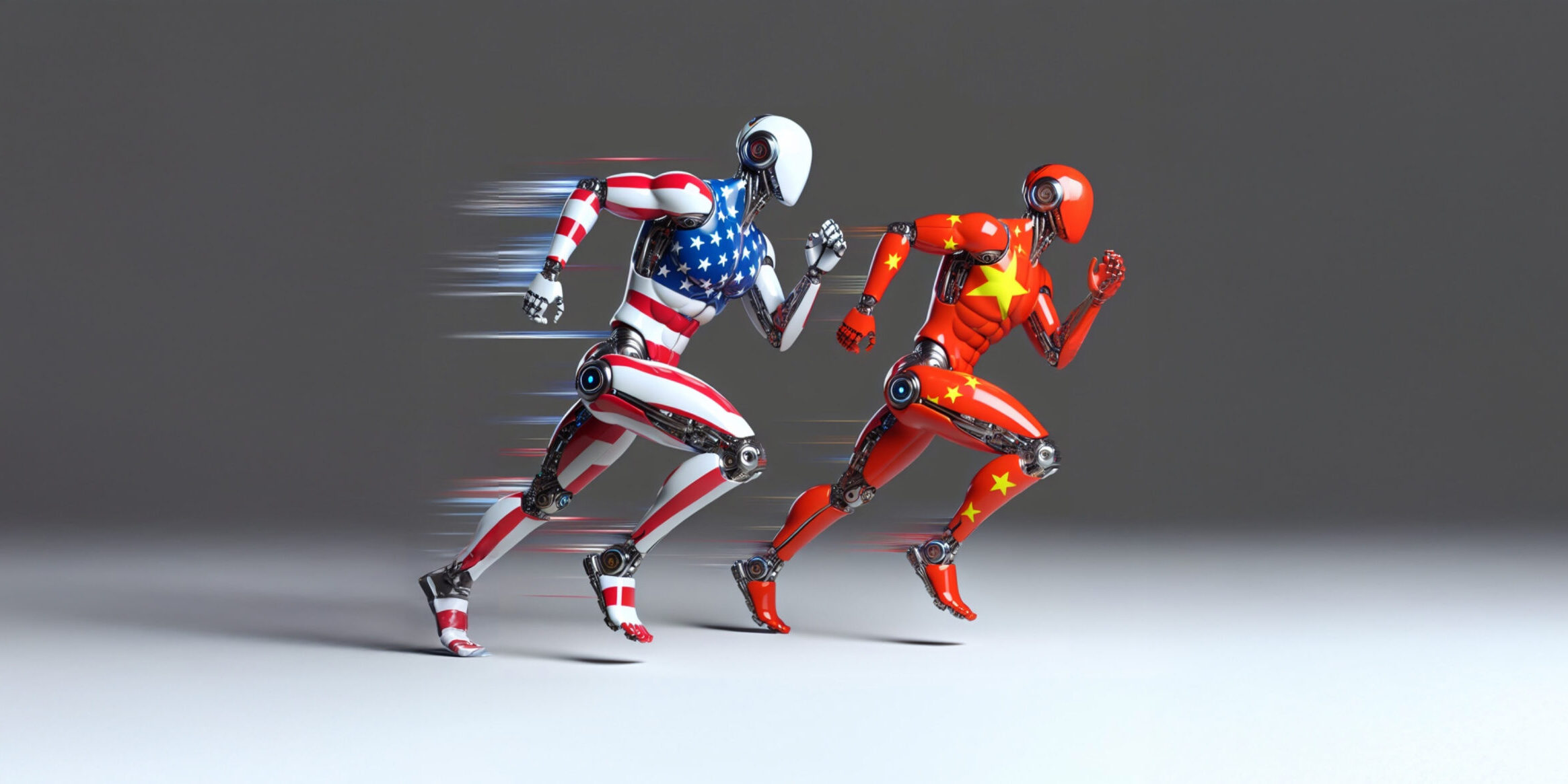
Over the past year, we have written extensively about how US President Donald Trump is remaking the American economy and reshaping the world order. An unintended consequence of his America-first economic policy and his transactional outlook on foreign affairs may be to help accelerate China’s rise as an economic superpower in the years to come.
One of Trump’s priorities at the outset of his term at the beginning of the year was to use tariffs as an instrument to reshore manufacturing to the US as well as to contain China’s growing economic clout. Time will tell whether Trump succeeds in bringing factories back to the US. But as of now, his efforts to constrain China’s rise as an economic force appear to have failed. They may even have backfired.
Indeed, even as the US signals its determination to move away from multilateralism and global intervention, China is becoming more assertive on the world stage. One sign of China’s growing influence and power is that it managed to stare down Trump as he tried to use tariffs to bend the nation to his will. China used its dominance of rare earths mining and processing to demonstrate that the US needs it as much as it needs the US.
China’s successes in recent years have been numerous. The country dominates manufacturing with output of $4.66 trillion and 28% of the global share in 2024 – more than Germany, Japan, and the US put together. Importantly, China either leads or is a major contender in all of the major high-tech industries of the future, including renewable energy and electric vehicles.
This year, China hit a major milestone, with its trade surplus (the difference between the value of goods it imports and exports) hitting $1 trillion for the first time. For the first 11 months, China’s exports rose to $3.4 trillion while its imports declined slightly to $2.3 trillion. The impressive performance highlights China’s success in developing alternative markets to compensate for the loss of some American business.
The rapidly growing Artificial Intelligence (AI) sector is another realm where China is making bold claims on the future. Early in the year, Chinese startup DeepSeek gave the US Big Tech companies a wakeup call by launching a large language model that was allegedly more efficient than their own AI technologies. American attempts to restrict China’s tech sector by curtailing exports of cutting-edge chips thus appear to have been largely ineffectual.
China is expected to sustain GDP growth rates of 5% to 6% in 2026 and 2027, which is impressive for its size. And its stock markets, which delivered lacklustre post-pandemic performance, surged this year along with other emerging market indices. The Shanghai Composite was up 20% in US dollars for the year-to-date at the time of writing, while Hong Kong’s Hang Seng was up 29%.
China’s share of global stock market capitalisation is smaller than its 20% share of global GDP. Chinese stocks account for only 3.11% of the MSCI ACWI Index. The trailing twelve-month price-to-earnings ratio on the Shanghai Composite and Hang Seng indices is relatively modest at 15.91 and 13.15, respectively. These metrics suggest significant scope for growth, both in terms of valuation expansion and increased integration into global investment portfolios. (Dynasty has recently incorporated an emerging market fund – with its implicit exposure to China — into its house-view global equity fund, in order to provide clients with a prudent level of access to these growth opportunities.)
That is not to say China does not have risks and challenges. A lingering housing bubble, elevated local government debt, low domestic consumption relative to GDP, continued reliance on exports, opaque market data, and deflationary pressures all pose risks to the nation’s economic trajectory. Overcapacity in manufacturing and weak consumer confidence are likely to weigh on growth, even as the government seeks to stabilise the economy.
Nonetheless, China looks set to consolidate its position as one of the most powerful players in a multipolar world. Its sheer economic scale, technological ambitions, military might, and influence over global supply chains mean it cannot be counted out. This reality is recognised even in the most recent US national security strategy statement, which acknowledges that the era of unchallenged American hegemony is over.
This will be our last News Flash for 2025. The new year will begin with our First Quarterly Update on 16 January 2026, followed by our first weekly News Flash on Friday, 23 January.
“China has already become a much more serious rival than the Soviet Union ever was – particularly in economic might.”
– US economist, Paul Krugman
Global News
- China’s trade surplus surpassed $1 trillion for the first time in the first 11 months of the year, as exporters increasingly redirected goods to non-US markets to avoid Trump’s tariffs. In November, overall exports rose 5.9% year-on-year, reversing October’s decline and beating forecasts, while imports grew 1.9%. Shipments to the US fell 29%, despite tariff-cut commitments made after the Trump-Xi meeting on 30 October, as the average US tariff on Chinese goods remains 47.5%, above the level that erodes exporter margins. Meanwhile, exports to the EU jumped 14.8%, to Australia 35.8%, and to Southeast Asia 8.2%, supported by China’s push since Trump’s 2024 election win to diversify markets and expand production hubs for lower-tariff access.
- China’s central bank extended its gold-buying streak in November, adding 6 tons to its reserves even as the precious metal’s rally began to cool after months of strong gains. This marks the fourth straight month of purchases and reflects Beijing’s continued strategy of diversifying away from US dollar assets amid geopolitical tensions and tariff uncertainty. While global gold prices have eased from recent record highs, analysts say China’s steady accumulation signals confidence in gold as a long-term hedge and suggests the People’s Bank of China will remain a key source of demand heading into 2026.
- China signalled at the Central Economic Work Conference, which concluded yesterday, that it will maintain supportive monetary and fiscal policies in 2026 but avoid a major stimulus push, reflecting a shift toward longer-term growth management. Officials said interest-rate and reserve-requirement cuts would be used flexibly to ensure liquidity, while budget deficits and spending would be kept at “necessary” levels. Policymakers pledged to stabilise investment, address property market weakness by controlling new supply and converting unsold homes into affordable housing, and tackling local government debt risks in an orderly way. The tone suggests confidence after a resilient year driven by strong exports, alongside a cautious focus on boosting consumption and managing structural headwinds rather than emergency-style stimulus.
- The Fed delivered a third straight interest rate cut on Wednesday, lowering the rate by 25bps, but the decision drew three dissents, the most since 2005, highlighting deep divisions over the policy path. Policymakers now project just one further rate cut in 2026, signalling a more cautious stance as they balance slowing economic momentum with still-sticky inflation. The statement noted cooling labour-market conditions and easing price pressures, but Fed officials stressed the need for flexibility amid uncertainty. Markets reacted with volatility as investors adjusted expectations for a slower, more gradual easing cycle than previously anticipated. UBS noted the dot plot still shows one cut next year, with Powell saying policy is now within a neutral range.
- Nvidia’s export of its H200 AI chip to China was approved by Trump on Monday, in exchange for a 25% surcharge, allowing the company to regain access to a major market after months of export restrictions. Trump announced the decision on Truth Social, saying only vetted “approved customers” may buy the chip, with Intel and AMD also eligible. The move follows intensive lobbying by Nvidia CEO Jensen Huang, who argued that US curbs were strengthening Chinese rivals like Huawei. Nvidia welcomed the deal, saying it supports US jobs and maintains security safeguards, though critics warn it could bolster China’s AI ambitions.
- Disney said yesterday it will license more than 200 characters, including Mickey Mouse, Cinderella, Ariel, Simba, and Woody, to OpenAI’s Sora under a three-year deal and will take a $1 billion stake in the startup. The agreement excludes talent likenesses and voices. Disney will use OpenAI tools internally and on Disney+, and it can buy more equity. CEO Bob Iger told CNBC that being paid for the deal “recognises the value being created”. On Wednesday, Disney sent Google a cease-and-desist letter, alleging its AI models and services infringe Disney copyrights on a “massive scale”.
- Meta Platforms is undergoing a major strategic pivot, with Mark Zuckerberg personally directing day-to-day work on a new paid AI model, codenamed Avocado, which is potentially Meta’s first significant shift away from its long-standing open-source strategy. The pivot comes as Meta pours unprecedented resources into AI, including plans to spend $600 billion on US infrastructure, while scaling back metaverse investment, navigating investor concerns over soaring costs, and contending with mixed results from early products like Vibes and internal restructuring across its AI divisions.
- Google plans to launch two types of AI-powered smart glasses in 2026, one with displays and one audio-focused, as it steps up competition with Meta, Snap, and Apple in the emerging AR and AI-wearables market. Working with partners like Samsung, Warby Parker, and Gentle Monster, Google is taking a more refined approach than its failed Google Glass experiment, pairing lightweight designs with smartphone-powered AI features through its Gemini assistant. The company also introduced upgrades to Samsung’s Galaxy XR headset, underscoring Google’s broader push into mixed-reality hardware and its new Android XR ecosystem.
- Novo Nordisk shares have fallen more than 50% in 2025, putting them on track for their worst year on record, as disappointing clinical trial results, multiple profit warnings, and intensifying competition in the obesity-drug market have erased much of the value created since Wegovy’s 2021 approval. Investor concerns about longer-term growth have intensified, with the key US semaglutide patent expiring in 2032 and analysts forecasting a sales dip in 2026 after years of rapid expansion. The company is banking on catalysts, including approval of a higher-dose Wegovy injection, an oral obesity pill targeted for launch next year, and a head-to-head trial of CagriSema against Eli Lilly’s Zepbound in 2026, under new leadership tasked with improving execution.
- Time magazine has named the “Architects of AI” its 2025 Person of the Year, recognising the individuals whose work has driven the rise of “thinking machines” and reshaped economies, industries and daily life. The group includes Nvidia CEO Jensen Huang, whose chips power the AI revolution; OpenAI CEO Sam Altman, a key figure behind the spread of generative AI; Meta CEO Mark Zuckerberg, who has embedded AI across digital platforms; AMD CEO Lisa Su, advancing high-performance computing; Elon Musk through Tesla and xAI; DeepMind CEO Demis Hassabis, a pioneer of AI research breakthroughs; Anthropic CEO Dario Amodei, focused on AI safety; and Fei-Fei Li, a leading advocate of human-centred AI. Together, their innovations have accelerated AI’s adoption, delivered transformative benefits while raising profound ethical and societal questions.
- As at Thursday’s close the S&P 500 was 0.45% up for the week.
Local News
- South African markets extended their strong run this week, with the rand, bonds, and equities benefiting from a supportive global backdrop and improving local fundamentals. The rand strengthened to its firmest levels since early 2023, while bond yields fell further, easing government funding costs, as investor appetite for risk remained robust. A dovish US Fed rate cut reinforced positive sentiment, alongside firm commodity prices, South Africa’s removal from the FATF greylist, credit-rating upgrades, and growing confidence in fiscal discipline. Analysts say the combination of global monetary easing and better domestic credibility has underpinned the rally, with momentum likely to carry into the new year despite lingering political and global risks.
- The ANC is entering a pivotal succession race as President Cyril Ramaphosa’s term winds down, with new polling showing a reshaped field of frontrunners ahead of the 2027 elective conference. Surveys by the Social Research Foundation place Secretary-General Fikile Mbalula narrowly ahead of Deputy President Paul Mashatile, while Electricity Minister Kgosientsho Ramokgopa has unexpectedly surged into contention, benefiting from a growing public profile and perceptions of competence. The ANC Women’s League is lobbying for a female leader, citing Deputy Secretary-General Nomvula Mokonyane and National Assembly Speaker Thoko Didiza as potential candidates. The evolving dynamics highlight internal factional shifts, uncertainty over ideological direction, and rising pressure on the ANC to demonstrate unity and renewal as it prepares for a post-Ramaphosa future.
- At the ANC’s 5th National General Council on Monday, Mbalula departed from his usual defensive tone as he delivered the party’s mid-term report, acknowledging that the ANC’s decline is long-standing and dates back to 2016. Reflecting on falling voter support and the pressures facing the Government of National Unity (GNU), Mbalula warned that “time is not on our side” ahead of the 2026 local elections, citing public frustration over slow service delivery, internal coalition tensions, and the ANC’s weakened position after losing its majority in 2024. He said rebuilding trust, accelerating delivery, and demonstrating progress on economic reforms were essential to stabilise the GNU.
- Mashatile is pushing to reopen debate on internal campaign financing, proposing that members be allowed to fundraise for leadership campaigns under strict rules. Last Saturday, on the sidelines of the National General Council, Mashatile said “resources and money play a very big role in politics,” noting smaller parties often cannot field candidates due to financial thresholds. The council is unlikely to decide now, but he said discussions on fundraising are unavoidable ahead of the 2027 conference.
- South Africa has been excluded from the G20 finance track for 2025, with Finance Minister Enoch Godongwana confirming on Tuesday that the US, as host, is not accrediting the country to attend. Although South Africa remains a permanent G20 member, accreditation controls physical access to meetings, and the US has publicly stated that Poland will be invited in its place. Pretoria has condemned the decision and says it has received no formal explanation for the exclusion. Godongwana said, “We’re not going because they’re not accrediting us,” stressing that the move does not alter South Africa’s legal G20 status.
- National Treasury said on Tuesday it has raised R118 billion through its debut infrastructure bond, exceeding expectations and marking one of South Africa’s most extensive single funding exercises as it seeks to accelerate investment in energy, transport, and water projects. The issuance forms part of the government’s broader effort to crowd in private capital for infrastructure, improve economic competitiveness, and ease pressure on the fiscus. National Treasury said strong demand reflected investor confidence in the asset class and plans to continue issuing similar bonds to support the country’s long-term infrastructure pipeline.
- Minister in the Presidency Khumbudzo Ntshavheni said on Tuesday that Cabinet has approved the critical minerals strategy implementation plan, aimed at moving South Africa beyond raw mineral exports to beneficiation by adding local value and boosting exploration. Ntshavheni said the plan outlines a roadmap to leverage demand for critical minerals used in digital technology, defence, healthcare, consumer electronics, and electric vehicles. It focuses on six pillars: geoscience mapping, value addition, research and innovation, infrastructure, financial instruments, and regulatory harmonisation.
- Retail sales strengthened in October as households regained spending power, with discretionary categories driving a 2.9% year-on-year rise, Statistics South Africa said on Wednesday. Clothing and footwear grew 5.8%, “other” retailers 7.2%, and household furniture and appliances 13%, while hardware sales rose 5.8%. Food, beverage and tobacco stores fell 1.9%. Seasonally adjusted sales increased 0.9% month-on-month, reversing September’s 0.1% and August’s 1.6% declines, offering a welcome boost for retailers and the wider economy.
- Spar has cut its net debt by 40% to R5.1 billion following the disposal of its Polish and Swiss operations, a restructuring that helped stabilise the group after several challenging years. The retailer reported improved earnings from its core South African and Irish businesses on Monday, supported by tighter cost controls and better operating efficiencies. Despite the stronger balance sheet and operational gains, Spar still withheld a dividend, citing the need to strengthen financial resilience further and invest in its ongoing turnaround. The group said dividends would resume only once debt levels fall further and cash generation improves sustainably.
- Mr Price announced a bold R9.6 billion deal to acquire Germany’s NKD Group on Wednesday, marking its largest-ever purchase and a major pivot into Europe’s €280 billion value retail market. The acquisition gives the South African retailer immediate scale in Europe through NKD’s 2,000-store footprint. NKD will continue to operate under its own brand, while Mr Price plans to apply its value retail expertise to improve performance and leverage synergies in sourcing and logistics. The company said the move supports its long-term strategy of becoming a globally competitive retailer with a balanced geographic portfolio.
- Capitec on Monday announced plans to spend up to R400 million to acquire Walletdoc, a fast-growing South African payments fintech, as part of its strategy to expand beyond traditional banking into digital payments and value-added financial services. The deal gives Capitec access to Walletdoc’s payment processing technology, strengthening its ability to serve SMEs and deepen its footprint in the digital commerce ecosystem. The acquisition forms part of Capitec’s broader push to build an integrated financial-services platform and compete more aggressively in South Africa’s rapidly evolving fintech landscape.
- As at the time of writing, the rand was 0.3% stronger against the dollar, and the ALSI was 1.5% up for the week.
Sources: Dynasty, Bloomberg, Reuters, CNN, BusinessDay, IOL Business, ITWeb, Daily Maverick, TechCentral, Business Report, etc.