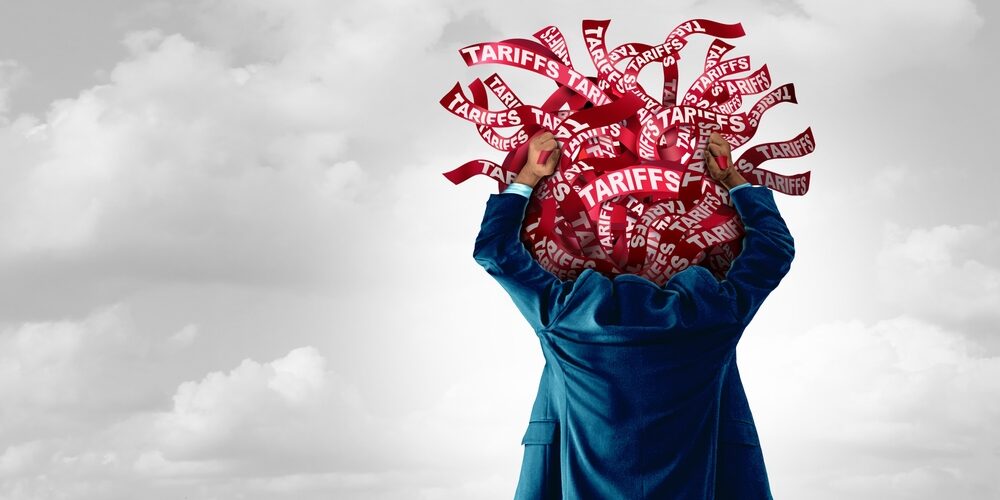
The second three months of 2025 were action-packed, shaped by US President Donald Trump’s aggressive tariff moves and a volatile geopolitical environment. The pace of events was dizzying, but investors should be pleased with the end returns in the face of this period of elevated turbulence.
At the outset of the quarter, most analysts and investors would have been pessimistic about the prospects for stock market gains. Global markets troughed in early April when Trump announced plans to impose steep tariffs on most of the US’s trading partners on what he dubbed “Liberation Day” (which we appropriately dubbed “Obliteration Day”).
The S&P 500 appeared set to enter bear territory, falling nearly 20% from its peaks earlier in the year. The subsequent recovery in markets when Trump paused many of the tariffs was as dramatic as the 12% four-day Liberation Day fall. The S&P 500 rallied 25% from the April lows, which was among the strongest non-recessionary climbs in two decades. The net effect was that the S&P gained 6.2% for the first half of the year, but only 1.5% from the February highs.
Even the 12-day war between Israel and Iran failed to stop markets from recovering. Equities largely shook off the potential impact of the US briefly entering the war to bomb Iran’s nuclear facilities. And the impact of this tension on the oil price turned out to be relatively short-lived and muted.
Dollar dips, equities rise
The resilience of US markets in the face of these events comes down to a few key factors. Trump’s willingness to pause and negotiate tariffs has given market participants hope that the final tariffs won’t be as extreme as those initially proposed. Markets were arguably looking ahead to a resolution of the negotiations between the US and its trade partners.
Furthermore, the underlying economy in the US has remained robust and supportive of corporate earnings. Companies continued to drive efficiencies, and consumer confidence has remained strong – indicating that the impact of those tariffs has yet to feed through into inflation or dampen consumer spending.
Additionally, following a relatively weak first quarter, the “Magnificent 7” tech stocks delivered returns of 21% for the second quarter. Big Tech stocks outperformed the rest of the S&P 500 due to renewed interest in the artificial intelligence (AI) theme, with high demand for AI infrastructure and software, but ended June only 1.66% up for 2025.
Finally, we cannot ignore the impact of the US dollar on stock market valuations. The US dollar fell 6.54% against a basket of currencies over the three-month period. This means that, while US equities indices have held up strongly in US dollar terms, the returns are not quite as impressive when they are measured in euros or British pounds.
The MSCI World Index, which captures global stocks across developed markets, was up 11.63% in dollars for the quarter. This index includes significant, but less concentrated exposure to US-listed equities. It is worth noting that European markets outperformed US indices in dollars, despite relatively low gains in local currency terms.
When it comes to South Africa, the FTSE/JSE rose 10.15% in rand terms and 12.78% in US dollars during the second quarter. In a separate article, we explore why the JSE has been one of the star performers among global equities markets for the year-to-date. In short, it’s all about a global commodities boom rather than any strength in the South African economy.
The rand appreciated 3.24% against a weakening dollar during the second quarter but weakened versus the euro and the pound. With fragile domestic fundamentals, continued instability around the Government of National Unity, and few signs of much needed reform, we expect the rand to remain under pressure against most major currencies over the medium term.
Tariffs, dollar, and the Mag 7 will drive the rest of the year
Looking ahead to the second half of 2025, we can expect an equally dynamic environment. Tariff developments, geopolitical risks, ongoing threats to fire the Fed Chair as well as AI will continue to be important themes. We can also expect macroeconomic factors to come to the forefront as trade tensions are hopefully addressed.
US consumer spending and job creation have held up well so far, but one of the big questions is whether this picture will change later this year. It remains to be seen if tariffs will hit inflation and consumer spending harder than they have to date, as well as how this influences the Federal Reserve’s interest rate path.
Whether the dollar depreciates further, stages a comeback, or treads water will also influence how the rest of the year plays out. That said, we would not make big bets against the buoyancy of US consumer spending as well as the ability of US companies to create new revenue streams and benefit from higher profits as a result of cost-cutting and technology-driven efficiencies.
The momentum behind AI raises some questions about how sustainable the tech stock boom is and how much further it can run. Nvidia has just smashed another record, becoming the first stock to be worth more than $4 trillion and quadrupling its value since June 2023.
Three of the Magnificent 7 (Nvidia, Microsoft, and Meta) are up by double digits since the beginning of the year and are trading at close to record highs overall. Amazon and Alphabet remain slightly off their peaks, while Apple and Tesla were down 18.1% and 21.4%, respectively, for the first half of 2025.
The performance of these mega-caps will have a big bearing on equities for the rest of the year. While their price earnings ratios are high, most are not exorbitantly so, besides Tesla, and earnings were relatively good in the first quarter. It remains to be seen whether the rally will widen, as some analysts have predicted for several quarters.
While sources of performance may diversify as European and Asian markets benefit from investors reallocating some of their funds from the US to other markets, we would not be in a hurry to write off US equities, despite the policy uncertainty Trump has introduced, nor AI, despite the bubble fears. What we may see is a repeat of the 2023 and 2024 disparity between Wall Street and Main Street, as tech stocks benefit from AI spend and consumers suffer from higher inflation and lower growth, largely, this time, as a result of higher tariffs.